
 English
  繁体中文
繁体中文  Spanish
  Hungarian
  Serbian
  Slovak
  Slovenian
  Romanian
  Dutch
Dutch  Russian
  Bulgarian
  Кыргызча
  O'zbekcha
 Why Cooling Buffer Tanks Help Prevent Chiller Short Cycling
Chiller performance depends on stable water circulation, sufficient water volume, and effective temperature control. When the water volume in a chilled water circuit is too low, the temperature can change rapidly as cooling demand fluctuates. This may cause the chiller to start and stop more frequently than necessary, increasing mechanical stress and making temperature regulation more difficult. A properly selected cooling buffer tank helps address these challenges by adding thermal capacity to the circuit and supporting more consistent chiller operation.
For commercial HVAC, industrial refrigeration, and chilled water applications, buffer tank selection should consider cooling capacity, water flow, operating conditions, and installation requirements. Legend supplies stainless steel buffer tanks in different materials and configurations, helping equipment manufacturers, contractors, and project buyers find suitable options for their cooling applications.
How a Cooling Buffer Tank Reduces Chiller Short Cycling
Chiller short cycling occurs when cooling equipment starts and stops repeatedly over short intervals. Insufficient water volume, rapid temperature changes, fluctuating cooling loads, and control settings that do not match operating conditions can all contribute to this behavior. Frequent cycling may increase wear on compressors and electrical components while creating less consistent chilled water temperatures.
A cooling buffer tank for chillers increases the volume of water available within the circuit, slowing temperature changes during periods of varying demand. This additional thermal capacity can help reduce unnecessary starts and stops when the chiller controls are configured appropriately. The actual improvement depends on chiller characteristics, minimum operating times, flow requirements, and the overall hydraulic design.
A buffer tank also helps separate the cooling demand of the building or process from short-term changes in chiller output. Rather than responding immediately to every small temperature fluctuation, the chiller can operate within a more stable range when the tank volume and control strategy are properly matched. This supports more predictable cooling performance without replacing the need for correct equipment sizing and commissioning.
Key Benefits of Buffer Tanks in Chilled Water Applications
More Stable Chilled Water Temperatures
Rapid changes in cooling demand can cause chilled water temperatures to fluctuate, particularly in circuits with limited water volume. A chilled water buffer tank adds thermal capacity, helping moderate these changes and maintain more consistent conditions for downstream equipment. This is valuable where cooling requirements vary throughout operating hours or where process temperatures need to remain within a defined range.
Temperature stability depends on tank capacity, water circulation, sensor placement, and control logic. Selecting a tank solely by physical size may not deliver the desired result. Engineers should evaluate the relationship between the chiller's output, circuit volume, and expected load variation before determining the appropriate configuration.
Improved Operating Conditions and Equipment Protection
Frequent starting and stopping can place additional demands on chiller compressors, contactors, and associated electrical components. By helping reduce short cycling under suitable operating conditions, a buffer tank can contribute to more favorable operating patterns and support equipment longevity. It can also help maintain the water volume required by the chiller when the connected cooling load is relatively small.
However, a buffer tank cannot correct every cause of cycling. Incorrect control settings, inadequate flow, oversized equipment, or faulty temperature sensors may require separate adjustments. A complete assessment of the chilled water circuit is therefore essential when repeated starts and stops occur.
Better Adaptation to Fluctuating Cooling Loads
Industrial refrigeration and commercial HVAC applications rarely maintain exactly the same cooling demand at all times. Production schedules, occupancy, outdoor conditions, and equipment operation can all influence the required cooling output. An industrial cooling buffer tank provides additional water volume to help absorb short-term differences between cooling production and demand.
This buffering function can improve operational flexibility, especially when the chiller and the connected load respond at different rates. Proper hydraulic design remains essential to ensure that the tank supports the intended flow path rather than introducing unnecessary resistance or unwanted mixing.
Choosing the Right Material for Cooling Buffer Tank
Material selection affects corrosion resistance, maintenance requirements, service life, and suitability for different operating environments. Legend offers stainless steel buffer tanks in SS304, SS316, and duplex 2205, allowing buyers to evaluate material options according to water quality, environmental exposure, and project specifications.
| Material | Main consideration | Typical selection factors |
|---|---|---|
| SS304 stainless steel | General corrosion resistance | Water quality, indoor installation, operating environment |
| SS316 stainless steel | Improved resistance to many chloride-containing environments | Corrosive exposure, water chemistry, maintenance expectations |
| Duplex 2205 stainless steel | High strength and strong resistance to several forms of corrosion | Demanding environments, mechanical requirements, project specifications |
The most suitable material depends on actual operating conditions rather than grade alone. Water chemistry, chloride concentration, temperature, fabrication quality, and maintenance practices should all be considered. Buyers should confirm material certificates and the suitability of the selected grade for the intended application.
Coil-Free Buffer Tanks for HVAC and Industrial Cooling
A coil-free cooling buffer tank stores additional water directly within the cooling circuit without using an internal heat exchange coil. This straightforward configuration can help reduce manufacturing complexity and procurement costs compared with designs that require internal heat exchange components. It is suitable when the primary objective is to increase circuit volume and stabilize chilled water operation rather than transfer heat between separate fluid circuits.
Coil-free designs are available for heat pump applications, commercial HVAC, and industrial refrigeration. Their suitability depends on the required water capacity, connections, working pressure, insulation, and available installation space. Where a separate heat exchange function is required, a tank with an appropriate coil or another heat exchanger may be more suitable.
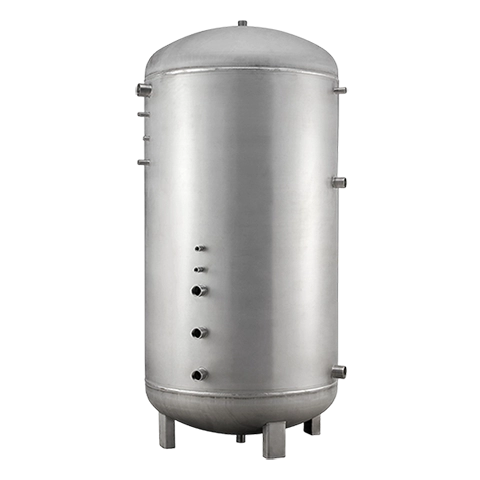
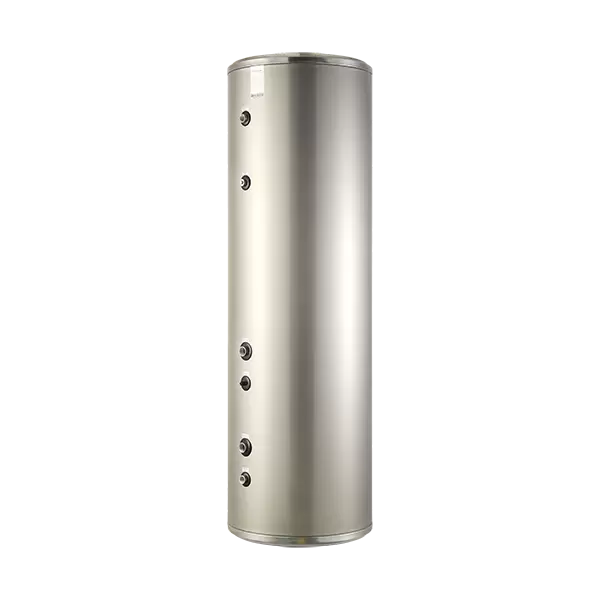
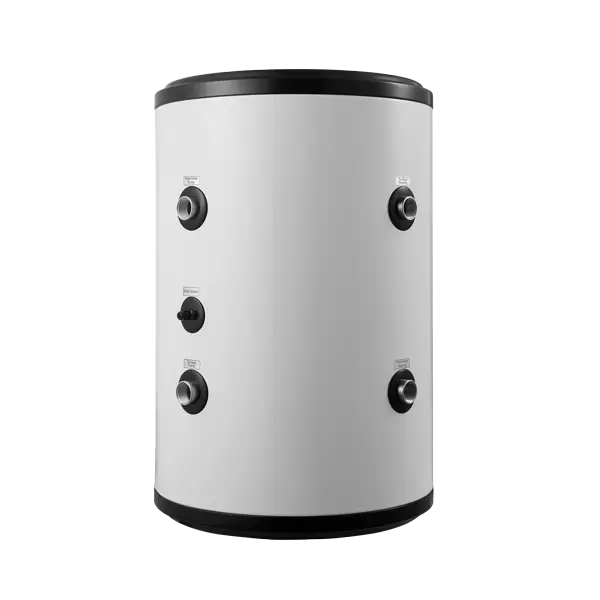
Legend offers vertical floor-standing and space-saving hanging buffer tank configurations. These options help buyers coordinate tank placement with plant room layouts, equipment access, and piping arrangements. The final selection should account for the full operating weight, mounting requirements, maintenance clearance, and the structural capacity of the installation surface.
Cooling Buffer Tank Sizing and Installation Considerations
Correct sizing is essential for achieving the intended buffering effect. An undersized tank may provide insufficient additional thermal capacity, while an oversized tank can increase equipment footprint, water volume, and initial cost without necessarily improving overall performance. Engineers should begin with the chiller manufacturer's minimum water volume and operating requirements before calculating the additional capacity needed.
Several factors influence the selection of buffer tank for chilled water circuit:
Chiller capacity and minimum operating time: These determine the buffering volume needed to support appropriate operating cycles.
Water flow rate: The tank connections and internal flow arrangement must accommodate the required circulation.
Cooling load variation: Frequent or rapid changes in demand may require additional thermal capacity.
Temperature differential: The permitted difference between supply and return water temperatures affects the volume calculation.
Installation constraints: Tank orientation, access, insulation, piping connections, and support requirements influence the final design.
A preliminary estimate can use the relationship between cooling load, desired operating time, and the allowable water temperature change. For water, a commonly used approximation is:
Required water volume (L) ≈ 14.3 × cooling capacity (kW) × buffering time (min) ÷ temperature differential (°C)
This is a simplified thermal estimate, not a complete tank-sizing method. The final volume must also account for water already present in the circuit, the chiller manufacturer's minimum volume, actual operating conditions, and the selected hydraulic arrangement.
Insulation and Energy Performance
Insulation helps reduce unwanted heat gain from the surrounding environment, which is particularly important when chilled water piping and tanks operate in warm or humid spaces. Effective insulation can limit unnecessary cooling demand and help reduce surface condensation when the insulation and vapor barrier are correctly specified and installed.
Legend uses fluorine-free insulation materials in its tank offerings, supporting projects that prioritize insulation performance and environmental considerations. Buyers should assess insulation thickness, thermal conductivity, vapor control, ambient humidity, and operating water temperature to determine suitability for their installation.
Energy savings depend on the complete cooling installation, including chiller efficiency, pump operation, control settings, insulation quality, and maintenance. A buffer tank should therefore be selected as part of an integrated cooling design rather than treated as an independent energy-saving device.
Custom Stainless Steel Buffer Tanks from Legend
Legend supplies stainless steel buffer tanks for heat pumps, cooling circuits, refrigeration applications, and commercial HVAC projects. Material options include SS304, SS316, and duplex 2205, with vertical floor-standing and hanging configurations available for different installation requirements. Customization can help align tank capacity, connection arrangements, and structural design with the intended application.
For equipment manufacturers, distributors, contractors, and wholesale buyers, selecting a suitable cooling buffer tank manufacturer involves more than comparing purchase prices. Material traceability, fabrication quality, pressure requirements, insulation performance, and technical support all influence long-term value. Legend supports project discussions and OEM/ODM requirements to help customers evaluate suitable tank configurations.
Before requesting a quotation, buyers should prepare the required capacity, operating and test pressure, water temperature range, connection standards, material preference, insulation requirements, and installation method. Providing these details helps establish a clearer technical basis for product selection and reduces avoidable specification changes during procurement.
Frequently Asked Questions
What does a cooling buffer tank do in a chiller circuit?
A cooling buffer tank adds water volume and thermal capacity to the chilled water circuit. It helps moderate temperature fluctuations and may reduce chiller short cycling when the tank is correctly sized and the controls are properly configured.
Does a buffer tank always prevent chiller short cycling?
No. A buffer tank can help when insufficient water volume or rapid temperature changes contribute to cycling, but it cannot resolve every underlying cause. Equipment sizing, minimum flow, control settings, and sensor operation should also be checked.
How do I calculate the required cooling buffer tank capacity?
Start with the chiller manufacturer's minimum water volume and operating requirements. Then evaluate cooling capacity, desired buffering time, allowable temperature differential, existing circuit volume, and load variation. Final sizing should be verified by a qualified HVAC engineer.
Which stainless steel is suitable for a cooling buffer tank?
SS304 may suit many general applications, while SS316 offers improved resistance to many chloride-containing environments. Duplex 2205 may be appropriate for more demanding corrosion or strength requirements. The final choice should reflect water chemistry, temperature, exposure, and project specifications.
Can a coil-free buffer tank be used for industrial refrigeration?
Yes. A coil-free buffer tank can be suitable for industrial refrigeration and chilled water applications when the required function is to increase circuit volume and stabilize water circulation. Applications requiring heat exchange between separate fluid circuits may need a different tank configuration.
For technical specifications, customized tank requirements, or wholesale inquiries, contact Legend through www.legendwatertank.com to discuss buffer tank solutions for your HVAC or industrial cooling application.