
 English
  繁体中文
繁体中文  Spanish
  Hungarian
  Serbian
  Slovak
  Slovenian
  Romanian
  Dutch
Dutch  Russian
  Bulgarian
  Кыргызча
  O'zbekcha
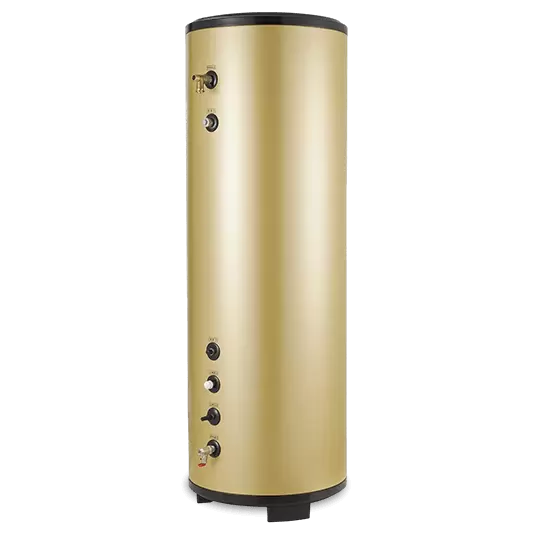
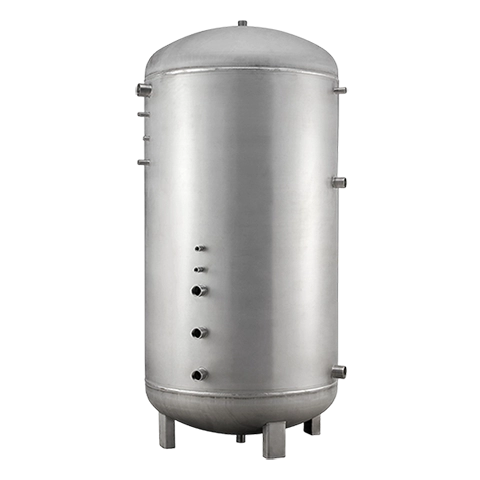
 Commercial hot water projects increasingly require thermal storage equipment that can handle variable heat input and changing water demand without compromising safety or operating efficiency. Solar collectors can provide substantial thermal energy during periods of strong sunlight, but heat production does not always coincide with the time when hot water is consumed. This creates a fundamental need for effective thermal storage. A properly selected solar heating water tank acts as the thermal buffer between heat generation and hot water consumption, allowing collected solar energy to be retained and used when demand increases.
For commercial installations, the storage vessel is not simply a container for heated water. Its construction, heat exchange configuration, pressure resistance, water-contact materials, connection arrangement, and compatibility with auxiliary heating equipment can all affect the performance of the complete installation. Legend develops stainless steel thermal storage solutions for solar water heating projects where durability, efficient heat transfer, controlled manufacturing, and customized configuration are important purchasing considerations.
Why Commercial Solar Heating Needs Dedicated Thermal Storage
Solar thermal energy is influenced by sunlight intensity, weather conditions, season, and operating hours. Commercial hot water consumption, on the other hand, may continue in the morning, evening, or during periods when solar radiation is limited. Without sufficient thermal storage, useful heat collected during high solar availability can be difficult to utilize when demand occurs later.
A commercial solar hot water storage tank addresses this mismatch by retaining heated water for subsequent consumption. The tank can receive thermal energy through a heat exchanger and maintain the stored hot water until it is required. This approach allows solar heat to contribute more effectively to the overall hot water load instead of depending entirely on simultaneous heat collection and consumption.
The value of thermal storage becomes particularly important when a project has fluctuating demand. A storage vessel with an appropriate capacity and heat exchange arrangement can help accommodate changes in water consumption while reducing the need for immediate heat generation during every demand cycle.
How a Solar Thermal Storage Tank Supports Heat Management
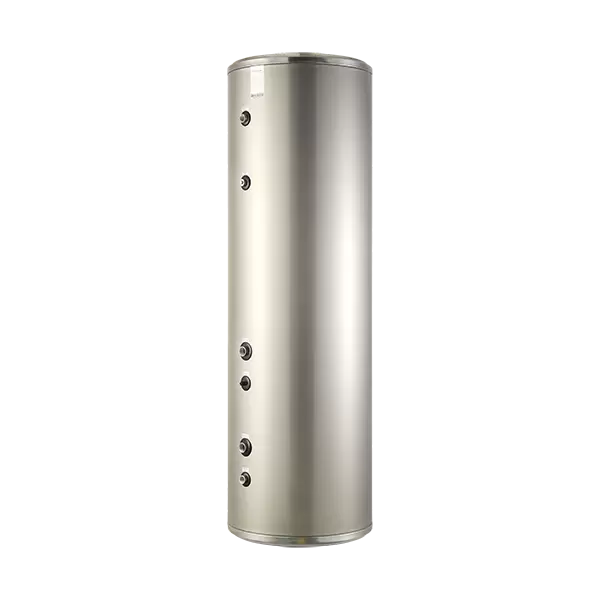
The performance of a solar water heating installation depends on how efficiently thermal energy moves from the collector circuit into the stored water. The storage tank therefore has two closely related functions: retaining usable thermal energy and transferring heat efficiently.
In a typical arrangement, a heat-transfer medium circulates through the internal coil while the stored water remains separated from the heating circuit. Thermal energy passes through the coil wall into the surrounding water. The design of the heat exchanger, available transfer area, temperature difference, and circulation conditions all influence how quickly heat can be transferred.
A high-efficiency coil can help improve this process by providing an effective heat-transfer path. This is especially relevant for commercial projects where faster heat recovery and consistent hot water availability can be more important than simply increasing tank volume.
Heat Exchange Efficiency Matters More Than Capacity Alone
A larger storage volume does not automatically mean better thermal performance. If heat transfer into the stored water is inefficient, increasing capacity may not solve the underlying problem. Commercial buyers should therefore evaluate the relationship between storage volume and heat exchange capability.
The coil configuration should be considered together with the expected heat source, operating temperature, circulation method, and required recovery rate. A suitable arrangement can help the tank receive available solar heat efficiently while maintaining a practical temperature profile within the stored water.
| Selection Factor | Why It Matters |
|---|---|
| Storage volume | Determines how much heated water can be retained |
| Coil efficiency | Influences the rate of thermal energy transfer |
| Heat source | Determines temperature and operating conditions |
| Working pressure | Defines the normal pressure range for operation |
| Material | Affects durability, corrosion resistance, and water quality |
| Connection layout | Influences installation and integration requirements |
| Project configuration | Determines whether customized manufacturing is necessary |
This is why professional solar thermal storage tank suppliers need to consider the complete application rather than recommending a vessel based only on nominal capacity.
Stainless Steel Construction for Hot Water Applications
The material used for a storage vessel is directly related to long-term performance. Hot water can place continuous demands on the tank through temperature variation, internal pressure, and prolonged contact with water. Stainless steel is widely selected for these applications because it combines structural durability with corrosion resistance and is suitable for water-contact environments when the appropriate grade and manufacturing practices are used.
For commercial projects, stainless steel construction also provides a practical foundation for maintaining a clean internal storage environment. When the stored water is intended for domestic use, the materials and manufacturing process should meet the applicable drinking water requirements of the target market.
Legend's stainless steel solar water tanks are designed with these considerations in mind. Material selection is combined with controlled welding and inspection so that the finished vessel can withstand the conditions associated with long-term thermal storage.
Pressure Resistance Is a Critical Purchasing Factor
Pressure is another important consideration that should not be overlooked when selecting commercial hot water storage equipment. Heating and circulation can cause changes in operating conditions, while connected equipment may introduce additional pressure fluctuations. The tank must therefore be manufactured and inspected according to clearly defined pressure requirements.
Legend tanks are rated for a 6 bar standard working pressure and undergo a 10 bar hydraulic pressure test before delivery. Hydraulic testing provides a controlled method of checking the integrity of the finished vessel under pressure above its standard working condition.
The inspection focuses on areas such as welding seams, tank structure, and sealing performance. This process helps identify potential leakage or structural problems before shipment rather than leaving pressure-related issues to be discovered after installation.
For overseas engineering purchasers, documented pressure testing is particularly valuable because the storage vessel may become part of a larger solar heating installation involving pumps, valves, heat exchangers, and other pressurized components.
Water Quality and Drinking Water Requirements
Commercial hot water storage can involve direct contact between the stored water and the internal surface of the vessel. For applications involving domestic hot water, water-contact safety should therefore be considered alongside mechanical performance.
A suitable stainless steel hot water storage tank should be manufactured using materials and processes appropriate for the intended water application. Compliance with applicable drinking water standards can help project owners and engineering contractors address water-contact requirements during equipment selection.
This consideration becomes increasingly important for international projects because regulatory requirements can differ between markets. Buyers should confirm the relevant standards before finalizing a tank specification, particularly when the stored water will be used directly for bathing, cleaning, or other domestic purposes.
Integrating Solar Heating With Other Heat Sources
Solar energy can provide a major portion of thermal demand, but commercial hot water requirements do not always match available solar radiation. For this reason, many projects need storage equipment capable of working alongside additional heat sources.
A solar compatible storage tank can be incorporated into an installation that also uses heat pumps or boilers. Solar energy can contribute thermal input when available, while another heat source can provide additional heating when solar contribution is limited.
This type of configuration gives engineers greater flexibility when designing the heating arrangement. Rather than treating solar heating and auxiliary heating as completely separate installations, the thermal storage vessel can serve as a common point for managing available heat.
Compatibility With Heat Pumps
Heat pumps are increasingly used for efficient hot water production, and the storage vessel must be properly matched to the heat pump's operating characteristics. Temperature requirements, heat-transfer area, connection configuration, and recovery expectations should all be considered during selection.
A heat pump compatible storage vessel can provide an effective interface between the heat source and stored water. When solar thermal equipment and a heat pump are used together, the tank can help coordinate different sources of thermal energy according to the requirements of the installation.
Compatibility With Boilers
Boilers can also be incorporated into commercial hot water installations where additional heating capacity is required. A boiler-compatible storage tank can provide thermal storage while allowing the boiler to contribute heat when necessary.
The key consideration is not simply whether different heat sources can be connected physically. Their operating temperatures, pressure conditions, heat-transfer requirements, and control arrangements need to be considered during engineering design.
Customization Is Important for Commercial Engineering
Commercial projects rarely have identical installation conditions. Available equipment-room space, pipe routing, heat source arrangement, connection positions, required capacity, and maintenance access can all differ from one project to another.
For this reason, custom solar water tank manufacturing can be more practical than relying exclusively on standard configurations. OEM and ODM capabilities allow the tank design to be coordinated with the project requirements before production.
Customization may involve the tank configuration, heat exchange arrangement, dimensions, connections, or other engineering requirements. The objective is not customization for its own sake, but ensuring that the finished vessel can be integrated efficiently into the planned hot water installation.
What Overseas Buyers Should Check Before Ordering
International buyers evaluating a solar thermal storage tank should look beyond product appearance and nominal capacity. Technical documentation and manufacturing controls can provide a clearer understanding of whether a supplier is suitable for a commercial project.
Important purchasing questions include:
What is the tank's rated working pressure?
Is hydraulic pressure testing performed on every finished vessel?
What material is used for water-contact surfaces?
Is the tank suitable for drinking water applications?
What type of heat exchanger is provided?
Can the tank work with solar heating, heat pumps, or boilers?
Are OEM and ODM configurations available?
Can the manufacturer support project-specific connection requirements?
What inspection procedures are completed before shipment?
Can the supplier provide technical information required by overseas engineering teams?
These questions help separate a basic storage vessel from a commercial solar thermal storage solution designed for long-term project integration.
Selecting Storage Capacity According to Actual Demand
Capacity should be determined from the project's actual hot water requirements rather than selecting the largest available vessel. Daily consumption, peak demand, solar collector output, desired storage temperature, available installation space, and auxiliary heating capacity should all be considered.
If the storage volume is too small, available solar heat may not be fully utilized and the auxiliary heat source may need to operate more frequently. If the vessel is unnecessarily large, installation space and equipment costs can increase without providing proportional benefits.
Engineers should therefore evaluate the relationship between hot water demand, solar heat input, storage capacity, and recovery rate. This approach produces a more balanced thermal storage design and makes it easier to determine the appropriate tank configuration.
Manufacturing Quality Supports Long-Term Performance
The service life of a thermal storage vessel depends on more than the selected material. Welding quality, forming accuracy, sealing, pressure inspection, heat exchanger manufacturing, and final quality control all contribute to the reliability of the finished product.
For this reason, a solar water tank factory should have defined inspection procedures throughout production rather than relying solely on a final visual check. Pressure testing is particularly important because some structural or sealing defects may not be apparent from external inspection alone.
Legend combines stainless steel construction with controlled pressure verification and project-oriented customization. Each finished vessel is hydraulically tested at 10 bar against its 6 bar standard working pressure, providing an additional quality-control step before delivery.
A More Complete Approach to Solar Thermal Storage
A commercial solar hot water installation is influenced by much more than the amount of water that can be stored. The effectiveness of the thermal storage vessel depends on how well it manages heat transfer, pressure, water quality, heat-source compatibility, physical installation requirements, and long-term operating conditions.
The right solar heating water tank should therefore be selected as part of the overall thermal design. Efficient coil performance can support heat transfer, stainless steel construction can provide durability for water storage, pressure testing can verify structural and sealing integrity, and OEM/ODM capability can help accommodate project-specific requirements.
For commercial solar thermal engineering and customized energy projects, Legend provides stainless steel storage vessels designed for integration with solar heating, heat pumps, and boilers. By combining thermal storage performance with controlled manufacturing and customization capabilities, the company supports overseas buyers looking for practical equipment for residential and commercial hot water applications.
FAQ
What is the main purpose of a solar heating water tank?
A solar heating water tank stores heated water or thermal energy generated through solar heating equipment. It helps separate the timing of heat collection from the timing of hot water consumption, making collected solar energy available when demand occurs.
Can a solar water tank be used for commercial hot water?
Yes. Commercial solar water storage tanks can be designed for applications with significant or variable hot water demand. Capacity, heat-transfer performance, pressure rating, and installation conditions should be determined according to the specific project requirements.
Can one storage vessel work with solar heating and a heat pump?
A compatible vessel can be integrated with solar heating and heat pump equipment. The heat-transfer arrangement and operating conditions should be evaluated during the engineering stage to ensure that the different heat sources are appropriately matched.
Why is a high-efficiency coil important?
The coil provides the heat-transfer path between the heating medium and stored water. An efficient coil can improve thermal transfer and help the storage vessel recover useful heat more effectively, particularly when the installation has changing hot water demand.
What pressure testing does Legend perform?
Legend's storage vessels have a standard working pressure of 6 bar and are hydraulically tested at 10 bar before delivery. The test checks areas including welding seams, tank structure, and sealing performance.
Are stainless steel solar water tanks suitable for drinking water?
They can be suitable for drinking water applications when the tank materials, manufacturing process, and finished product comply with the applicable drinking water requirements. Project purchasers should confirm the relevant standards for their destination market.
Can Legend provide customized solar water tanks?
Yes. Legend supports OEM and ODM customization for solar thermal storage projects. Project-specific requirements can be discussed according to the required application, installation conditions, heat source arrangement, and tank configuration.