
 English
  繁体中文
繁体中文  Spanish
  Hungarian
  Serbian
  Slovak
  Slovenian
  Romanian
  Dutch
Dutch  Russian
  Bulgarian
  Кыргызча
  O'zbekcha
 Selecting the right capacity for a multifunction water tank is not simply a matter of choosing the largest available volume. Tank capacity directly affects hot water availability, heating recovery, thermal storage performance, installation requirements, and overall project efficiency. A suitable vessel should provide enough stored water and thermal energy during periods of demand while avoiding unnecessary volume, space, and heat retention losses.
For residential, commercial, and custom heating projects, the correct capacity depends on several connected factors. These include hot water consumption, peak demand, heat source output, heating recovery time, intended storage function, installation conditions, and the configuration of connected heating components. By evaluating these factors together, buyers can select a hybrid thermal storage vessel that better matches actual operating requirements.
Start With the Purpose of the Water Tank
Before calculating capacity, identify exactly what the tank needs to accomplish. A multifunction water tank can be used for domestic hot water storage, hybrid heating, thermal energy storage, hydronic heating, refrigeration-related applications, and projects using two heat sources. Each application places different demands on storage volume.
For a domestic hot water application, the main consideration is the amount of usable hot water required during peak consumption. For a hybrid heating project, the calculation also needs to consider how much thermal energy should be stored between heating cycles. A multi application water tank therefore needs to be selected according to its intended operating role rather than by volume alone.
This distinction is especially important when the vessel is connected to renewable or alternative heat sources. Some heating sources may provide heat continuously but at a lower output, while others can provide rapid heating during periods of high demand. Appropriate storage capacity allows these different heat sources to work together more effectively.
Calculate Peak Hot Water Demand
Daily water consumption provides useful information, but peak demand is usually more important when selecting a DHW storage tank. Water usage is rarely distributed evenly throughout the day. Morning routines, evening bathing, cleaning, and simultaneous water use can create short periods of substantially higher demand.
A tank should therefore have enough stored hot water to handle the expected peak period without excessive temperature reduction. If the selected capacity is too small, the connected heater may need to operate continuously to maintain supply. This can increase heating cycles and reduce the comfort of hot water delivery.
At the same time, selecting excessive capacity may not provide proportional benefits. A larger vessel stores more water, but more water must be heated and maintained at temperature. The better approach is to establish the expected peak demand first and then match storage capacity with the heating recovery capability.
Match Storage Volume With Heating Output
The relationship between tank capacity and heat source output is one of the most important factors in hybrid heating design. A two source heating tank may connect two different heating sources, but the available heating output of those sources determines how quickly stored water can be replenished.
A high-output heating source can recover a larger tank more quickly, while a lower-output source may require more time to raise the stored water temperature. If the tank is oversized compared with available heating capacity, recovery may take longer than expected. If the tank is undersized, stored hot water may be consumed faster than it can be replenished.
The ideal capacity therefore creates a practical balance between storage and recovery. Buyers should consider the heating output, expected operating temperature, heating schedule, and frequency of hot water demand before confirming the vessel volume.
Consider Thermal Storage Requirements
A hybrid thermal storage vessel is not only designed to hold water. It can also provide a thermal buffer between heat generation and heat consumption. This becomes valuable when heat production and demand do not occur at exactly the same time.
Thermal storage can absorb available heat and release it when demand increases. This approach can help reduce unnecessary fluctuations in heating operation and make better use of different heat sources. The required storage volume depends on how long the project needs to retain useful thermal energy and how quickly the connected heating source can recharge the vessel.
For this reason, capacity selection should consider both water volume and thermal energy requirements. A buyer looking only at the number of liters may overlook the operating characteristics that actually determine whether the tank performs effectively.
Check the Available Installation Space
Capacity is also closely connected with physical dimensions. As storage volume increases, the tank generally requires greater installation height, diameter, transportation access, and maintenance clearance. The available plant room or utility area should therefore be measured before purchasing.
Installation planning should include sufficient room around water connections, heating components, valves, and other accessories. Vertical clearance can also become important for larger storage vessels, particularly when the tank needs to be transported through doors, corridors, or service areas.
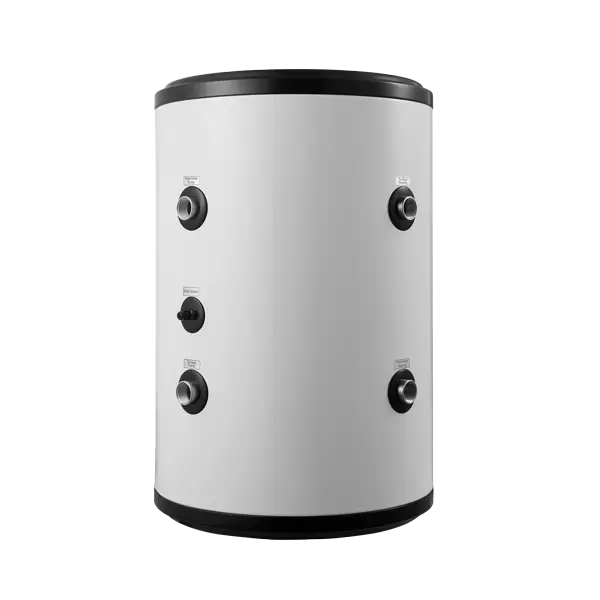
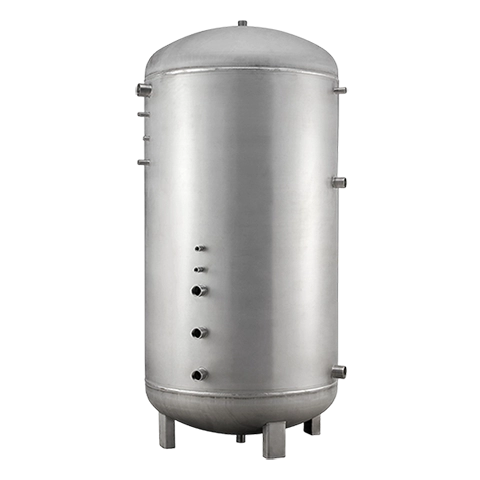
Legend provides a broad capacity range from 60L to 2000L, making it possible to select storage volume according to different project requirements. Instead of selecting capacity first and attempting to accommodate the vessel afterward, buyers should evaluate the available installation area as part of the initial tank selection process.
Select the Appropriate Inner Tank Material
Capacity should never be separated from material selection. The inner tank is available in SUS304, SUS316L, and Duplex 2205, giving buyers options for different water storage conditions and performance requirements.
SUS304 is widely used for general stainless steel water storage applications, while SUS316L can be considered when greater resistance to demanding water environments is required. Duplex 2205 provides another material option for projects where enhanced mechanical and corrosion-resistant performance is important.
The correct material depends on water quality, operating conditions, project specifications, and expected service requirements. Choosing a larger tank made from an unsuitable material does not solve the underlying application problem, so material compatibility should be evaluated at the same stage as capacity.
Pay Attention to Thermal Insulation
Storage capacity also affects heat retention. The larger the stored water volume, the more important it becomes to maintain stable thermal performance during periods when hot water is not being actively consumed.
Legend multifunction water tanks use approximately 45–50 mm of foaming insulation, depending on configuration. Proper insulation helps limit heat transfer from the stored water to the surrounding environment, supporting better temperature retention during standby periods.
When comparing thermal storage tanks, buyers should therefore look beyond the nominal capacity. Two vessels with similar water volume may have different thermal characteristics because of insulation thickness, construction, operating temperature, and external conditions.
Choose the Right Heating Coil Configuration
Heating coil configuration is another factor that can influence the suitability of a tank for a particular project. Legend offers different coil configurations, including flat coils, wave coils, and refrigerant system coils, depending on application requirements.
The appropriate coil arrangement should correspond with the connected heat source and the required heat transfer conditions. For hybrid applications, coil selection can be particularly important because the tank may need to accommodate more than one heating source.
A properly selected coil configuration can support efficient heat transfer while allowing the storage vessel to perform its intended heating function. This is why a customized multifunction water tank can be more appropriate than a standard vessel with limited connection and coil options.
Review Pressure and Temperature Requirements
Operating pressure and temperature should also be checked before confirming tank capacity. The provided specifications indicate a maximum working pressure of 6 bar, a maximum testing pressure of 10 bar, and a maximum running temperature of 90°C.
These values should be compared with the requirements of the connected heating equipment and piping arrangement. The tank should be suitable for the expected operating conditions rather than selected purely on storage volume.
The product also supports high-temperature sterilization around 75°C, which is relevant for applications where hot water hygiene and temperature management are important considerations. The sterilization temperature should not be confused with the maximum running temperature when preparing technical specifications or project documentation.
Consider Water Connections and Project Compatibility
A tank may have the correct capacity but still require modification if its water connections do not match the project piping. Legend supports G, BSP, and NPT connections, with available connection sizes including 3/4-inch and 1-inch configurations depending on the product arrangement.
Connection compatibility should be reviewed together with inlet and outlet positioning, pipe diameter, flow requirements, valves, and heating coil connections. Early coordination can reduce installation modifications and simplify commissioning.
For overseas projects, connection standards can be especially important because different markets may use different piping specifications. Confirming the required connection type before production can help ensure that the selected water storage tank integrates properly with the surrounding equipment.
When Should You Choose a Custom Water Tank?
Not every heating project can be solved with a standard configuration. A custom multifunction water tank may be more suitable when the project requires a specific capacity, material, outer shell, coil configuration, color, connection standard, or installation arrangement.
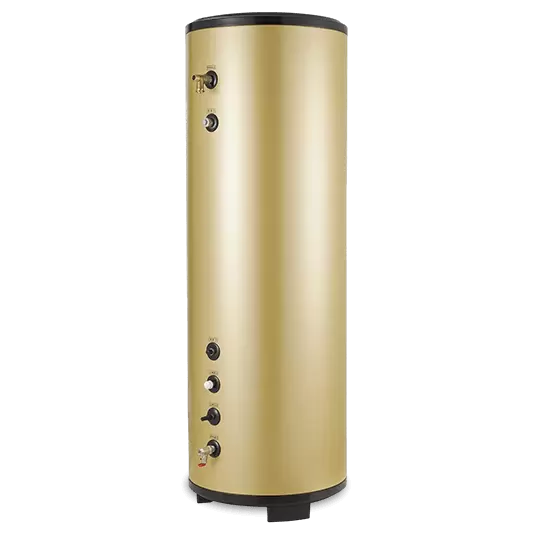
Legend supports customized water tanks with stainless steel inner tanks, different outer shell options, multiple colors, and various heating coil configurations. The outer shell can be supplied in galvanized steel with painting or stainless steel, with available finishes including white, silver-grey, brown, black, and stainless steel.
Customization should be based on actual project requirements rather than unnecessary modifications. The objective is to create a tank configuration that fits the application, installation environment, heat source, and expected operating conditions.
Why Manufacturing Quality Matters at Larger Capacities
As tank capacity increases, welding quality and sealing performance become increasingly important. A storage vessel may contain a substantial volume of water, making consistent welding and leakage prevention essential to long-term operation.
Legend uses fully automatic water nozzle welding lines for stainless steel tank fabrication. Automated welding helps maintain consistent weld quality and reduces variations at water nozzle joints. The manufacturing process also includes 100% online leakage testing at 6–16 Kgf/cm² with pressure holding for three minutes.
The company has more than 17 years of professional welding experience, and its welders are certified. Key components are sourced from established suppliers, while the products are supported by a three-year warranty. These manufacturing controls provide additional confidence when selecting a tank for long-term hot water and thermal storage applications.
A Practical Capacity Selection Checklist
Before ordering a multifunction water tank, buyers should review the following factors:
| Selection Factor | Key Question |
|---|---|
| Hot water demand | What is the expected peak consumption? |
| Heating output | How quickly can the heat source recharge the tank? |
| Storage function | Is the vessel for DHW, heating, or thermal storage? |
| Heat sources | Will one or two heat sources be connected? |
| Installation | Is sufficient height and floor space available? |
| Material | Is SUS304, SUS316L, or Duplex 2205 appropriate? |
| Insulation | Is the thermal retention performance suitable? |
| Heating coil | Which coil configuration matches the heat source? |
| Connections | Are G, BSP, or NPT fittings required? |
| Operating conditions | Are pressure and temperature requirements compatible? |
| Customization | Are special dimensions or components required? |
Final Thoughts on Multifunction Water Tank Selection
Choosing the right multifunction water tank capacity requires more than estimating how much water a project uses. The best selection balances peak demand, heating output, thermal storage requirements, available installation space, material compatibility, insulation, coil configuration, and operating conditions.
For residential hot water, commercial heating, new energy applications, and custom engineering projects, the correct storage volume should support stable operation without creating unnecessary equipment size. A well-matched vessel can provide sufficient hot water reserves while allowing connected heat sources to operate according to their intended characteristics.
With capacities from 60L to 2000L, stainless steel inner tank options, multiple heating coil configurations, flexible connection standards, and customized outer finishes, Legend provides multifunction water tank solutions for a broad range of heating and water storage requirements. Careful capacity selection at the design stage can make the final installation easier to integrate and better aligned with long-term operating needs.
FAQ
What is a multifunction water tank used for?
A multifunction water tank can support domestic hot water storage, hybrid heating, thermal energy storage, hydronic heating, refrigeration-related applications, and projects requiring multiple heating connections.
How should I determine the required tank capacity?
Consider peak hot water consumption, heating source output, recovery time, required thermal storage, installation space, and the intended operating temperature. These factors should be evaluated together before selecting capacity.
Can a multifunction water tank support two heat sources?
Yes. The product is designed to support dual heat source connection, making it suitable for hybrid heating projects where two different heat sources contribute to water heating or thermal storage.
What materials are available for the inner tank?
Legend offers SUS304, SUS316L, and Duplex 2205 inner tank materials. The appropriate choice depends on water conditions, project requirements, and the desired level of corrosion and mechanical performance.
What capacity range is available?
The available multifunction water tank range covers 60L to 2000L, providing options for different domestic, commercial, heating, and engineering applications.
Can the tank be customized?
Yes. Customization can include capacity, inner tank material, outer shell material and color, heating coil type, and water connection configuration according to project requirements.