
 English
  繁体中文
繁体中文  Spanish
  Hungarian
  Serbian
  Slovak
  Slovenian
  Romanian
  Dutch
Dutch  Russian
  Bulgarian
  Кыргызча
  O'zbekcha
 Why Custom Storage Matters in Heat Pump and Solar Heating
Heat pump and solar heating installations do not always produce or consume thermal energy at the same time. Heat availability can change according to operating schedules, outdoor conditions, solar radiation, and hot water consumption. A properly designed storage vessel helps bridge this gap by holding usable thermal energy until it is needed, while also providing the volume required for stable operation.
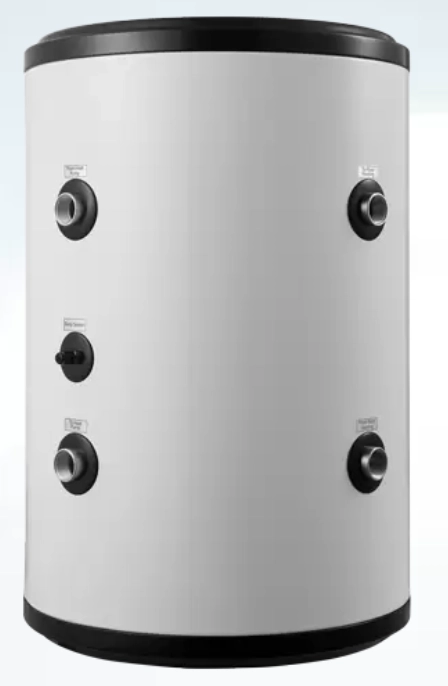
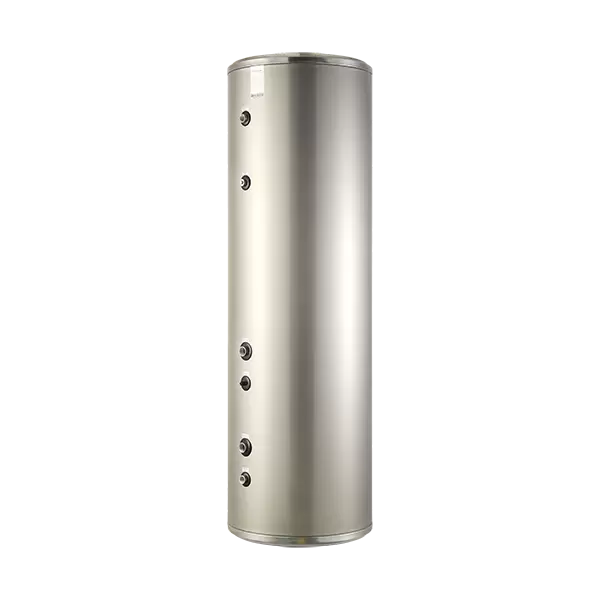
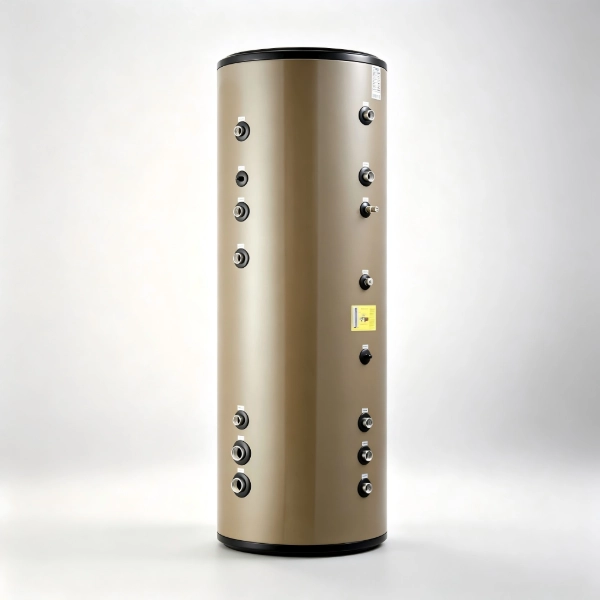
A custom water tank gives engineers greater freedom to match storage capacity, connection positions, heat exchange requirements, installation orientation, and available space. Rather than forcing an existing installation to accommodate a standard vessel, the tank can be configured around the actual requirements of the heating project. This approach is particularly valuable when heat pumps, solar collectors, HVAC equipment, sanitary hot water circuits, or other heat sources need to operate together.
Custom Water Tank Design Starts With the Heating Application
The first consideration should be how the stored water will be used and how heat will enter or leave the vessel. A tank serving a heat pump installation may require a different internal arrangement from one used for solar thermal collection, sanitary hot water, industrial refrigeration, or heat recovery. Understanding the application helps determine the appropriate material, volume, coil arrangement, connection layout, and installation configuration.
For projects involving several thermal sources, a custom thermal storage tank can provide greater flexibility than a basic storage vessel. Heat pump circuits, solar heating loops, boilers, heat recovery equipment, or other sources can be connected according to the intended operating arrangement. This allows the storage vessel to become a coordinated part of the overall heating architecture rather than an isolated component.
Matching Storage Volume With Actual Demand
Tank volume should be selected according to the required thermal reserve rather than simply choosing the largest available capacity. Excessive storage can occupy valuable installation space and increase heat losses, while insufficient capacity may limit the ability to absorb heat during periods of high production or provide sufficient hot water during demand peaks.
A practical design assessment should consider consumption patterns, heat source capacity, desired storage temperature, recovery time, available installation area, and the relationship between heating and demand. For international engineering projects, these factors can vary significantly according to local climate, building use, energy source, and operating schedule.
| Design Consideration | Primary Design Objective |
|---|---|
| Tank volume | Match thermal storage requirements |
| Heat exchange | Transfer heat efficiently between circuits |
| Port arrangement | Simplify piping and equipment integration |
| Installation orientation | Adapt to available plant-room or equipment space |
| Material selection | Address water quality and corrosion conditions |
| Insulation | Reduce unnecessary standing heat loss |
| Custom structure | Accommodate project-specific engineering requirements |
Stainless Steel Construction for Long-Term Thermal Storage
Material selection has a direct influence on the service life and suitability of a storage vessel. Stainless steel is widely used for hot water and thermal storage applications because it can provide corrosion resistance, mechanical strength, and a clean internal surface. Different stainless steel grades can be selected according to the stored medium, environmental conditions, and project requirements.
Legend manufactures tanks using SS304, SS316, and Duplex 2205 stainless steel, allowing the construction to be matched with different media and corrosion-resistance requirements. This material flexibility is important for projects that may involve sanitary drinking water, heated water, industrial circulation fluids, or more demanding operating environments.
The manufacturing process is also critical to tank performance. Stainless steel plate cutting, automatic cylinder rolling, nozzle welding, pressure testing, and polyurethane insulation are performed through controlled production stages. Sequential inspection helps maintain structural tightness, pressure resistance, and consistent fabrication quality throughout the finished vessel.
Heat Pump Water Heating Requires Flexible Thermal Storage
Heat pumps are designed to move heat rather than generate it through direct combustion. Their operating performance can vary with source temperature, load conditions, and control strategy. Adding thermal storage provides a practical way to separate heat production from short-term fluctuations in consumption.
A custom water tank for heat pump applications can be configured to accommodate the specific connection requirements of the heat pump circuit while providing sufficient stored water for downstream demand. Depending on the application, the vessel can support hot water storage, heating circuits, buffering, or heat exchange between separate fluid circuits.
This flexibility becomes particularly useful when a heat pump serves several demand points. Instead of requiring the heating equipment to react immediately to every change in consumption, stored thermal energy can provide additional capacity during periods of increased demand. The result is a more manageable relationship between heat generation, storage, and consumption.
Solar Heating Benefits From Purpose-Built Storage
Solar thermal energy is inherently variable. Heat production changes with daylight hours, weather, season, and collector performance, while hot water consumption may occur when solar input is low or unavailable. Thermal storage allows useful solar heat to be retained for later use instead of requiring immediate consumption.
A custom solar water tank can therefore play an important role in improving the usability of solar heating. Internal heat exchange components can transfer energy from the solar circuit into stored water while keeping the two fluid circuits separated where required. The tank can then supply heated water according to the building's demand rather than the exact timing of solar generation.
For combined renewable heating installations, the storage vessel can also be configured around multiple heat sources. This makes it possible to coordinate solar energy with heat pump heating or supplementary thermal equipment according to project requirements.
Flexible Port Layout Improves Installation Efficiency
Tank connections are often overlooked during initial equipment selection, yet port positioning can have a major effect on installation work. Incorrect connection locations may require additional piping, unnecessary bends, more installation space, or difficult maintenance access.
A custom water storage tank allows inlet, outlet, circulation, heat exchange, and other connection positions to be coordinated with the surrounding equipment. Custom port arrangements can help engineers create cleaner piping routes and make better use of restricted plant-room space.
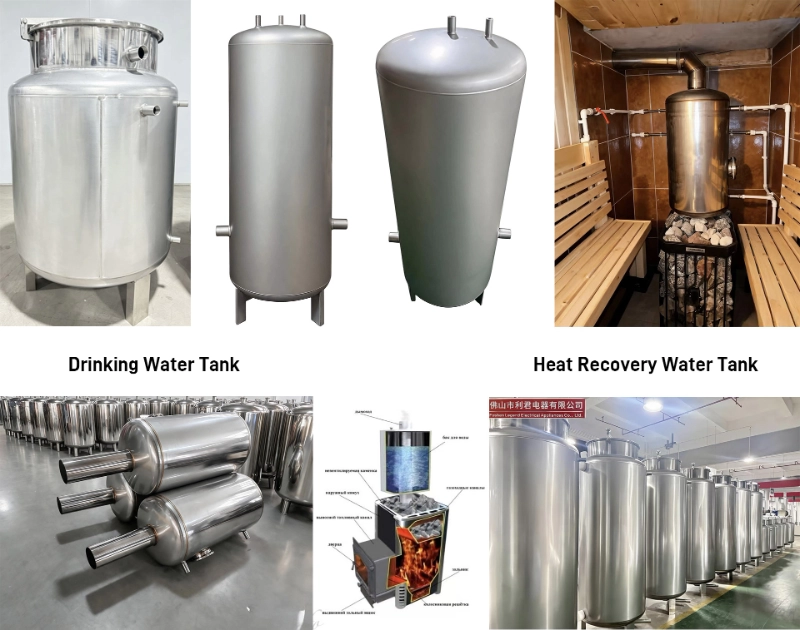
Legend supports customized ports, volume, and external configurations for different engineering requirements. Wall-mounted, vertical, and horizontal tank arrangements are available, helping the vessel adapt to locations where floor area, ceiling height, or equipment positioning creates practical limitations.
Vertical, Horizontal and Wall-Mounted Configurations
Not every heating project has the same installation environment. A vertical tank may be suitable where floor space is limited but sufficient ceiling height is available. A horizontal configuration can be more appropriate where vertical clearance is restricted, while wall-mounted designs can help preserve valuable floor area.
This makes custom water tank manufacturing particularly useful for renovation projects, compact equipment rooms, and specialized heating installations. The physical shape of the vessel can be considered together with connection orientation and maintenance requirements rather than selected solely according to storage volume.
Legend provides vertical, horizontal, and wall-mounted options, as well as specialized configurations for sauna heat recovery applications. This range allows the tank structure to be aligned with different engineering environments without sacrificing the intended storage function.
One Tank Can Support More Than Hot Water Storage
Thermal storage is not limited to conventional domestic hot water. Depending on the configuration, a multifunction vessel can combine thermal storage, heat recovery, drinking water storage, and buffering functions within a coordinated design.
This makes multifunction tanks relevant to heat pump and HVAC applications, sauna and wood stove projects, hotel sanitary hot water, residential central heating, industrial refrigeration, and chemical circulation applications. The appropriate arrangement depends on the fluid, temperature requirements, heat source, heat transfer method, and intended operating sequence.
For engineering companies and equipment manufacturers, this multifunction approach can reduce the need to design around several independent storage vessels. A carefully engineered tank can instead accommodate multiple operational requirements while maintaining clear separation between relevant circuits.
OEM and ODM Customization for Global Projects
Standardized equipment can be efficient for common applications, but international projects frequently have different installation standards, connection requirements, dimensions, branding needs, and equipment layouts. OEM water tank manufacturing allows the vessel to be produced around a customer's technical requirements rather than requiring the customer to redesign the surrounding installation.
ODM capability can provide an even broader approach when the customer requires assistance with the tank's configuration and product development. Custom volume, ports, logo application, orientation, coil design, and external configuration can be incorporated according to the intended application.
For wholesalers, heating equipment manufacturers, HVAC companies, and engineering contractors, this flexibility can make procurement more practical when a standard off-the-shelf vessel does not meet the required specifications.
Quality Control From Fabrication to Pressure Testing
A storage vessel must maintain structural integrity throughout repeated heating and cooling cycles. Welding quality, cylinder forming, nozzle fabrication, pressure resistance, and insulation performance all influence long-term reliability.
Legend follows a sequential manufacturing workflow covering stainless steel plate preparation, automatic cylinder rolling, nozzle welding, pressure testing, and integral polyurethane insulation. Strict inspection at different production stages is intended to maintain consistent structural tightness and pressure resistance rather than relying only on final inspection.
The tanks are also produced to meet CE and ISO9001 requirements, supporting international procurement and quality management expectations. For overseas buyers, this provides an additional basis for evaluating manufacturing consistency when sourcing customized thermal storage equipment.
Choosing the Right Configuration for Your Project
Selecting a customized vessel should begin with the application rather than the tank itself. Engineers should first define the heat sources, stored medium, expected demand, temperature range, required thermal reserve, available installation space, and connection requirements. These details provide the foundation for determining the appropriate construction.
| Application | Useful Tank Function |
|---|---|
| Heat pump heating | Hot water storage and thermal buffering |
| Solar heating | Solar heat storage and transfer |
| HVAC | Thermal buffering and load balancing |
| Hotel hot water | Sanitary hot water storage |
| Sauna and wood stove | Heat recovery and hot water storage |
| Industrial refrigeration | Thermal storage and circulation |
| Residential heating | Central heating storage |
| Chemical circulation | Customized fluid storage |
For projects with unusual dimensions, multiple heat sources, or limited installation areas, early customization can prevent costly modifications later. Working directly with an experienced custom water tank manufacturer also makes it easier to coordinate tank construction with heat exchange requirements, piping, insulation, and the surrounding equipment.
Why Legend Supports Custom Thermal Storage Projects
Legend combines stainless steel fabrication with customized tank engineering for different heating and storage applications. Its manufacturing capability covers SS304, SS316, and Duplex 2205 construction, while tank configurations can be adapted for heat pumps, solar heating, HVAC, sanitary hot water, heat recovery, industrial refrigeration, and other applications.
The emphasis is not simply on producing a storage vessel with a specified capacity. The objective is to provide a tank that fits the project's thermal requirements, installation conditions, connection layout, material requirements, and long-term operating needs. With customized volume, ports, logos, orientations, and coil configurations, Legend can support OEM and ODM requirements for global wholesale and engineering projects.
FAQ
What is a custom water tank?
A custom water tank is designed or configured according to specific project requirements rather than using a fixed standard arrangement. Dimensions, capacity, ports, materials, orientation, coil configuration, and other features can be adapted for the intended application.
Can a custom tank work with both heat pumps and solar heating?
Yes. A properly configured tank can support heat pump and solar thermal applications, including arrangements where different heat sources contribute to stored thermal energy. The internal heat exchange design should be selected according to the intended circuit arrangement.
Which stainless steel is suitable for a custom storage tank?
SS304, SS316, and Duplex 2205 can be selected according to the stored medium, corrosion conditions, and engineering requirements. The appropriate material should be determined from the water or fluid characteristics and operating environment.
Can the tank be customized for limited installation space?
Yes. Custom configurations can include vertical, horizontal, and wall-mounted arrangements. Connection positions and overall dimensions can also be coordinated with the available installation area.
Can Legend provide OEM and ODM water tanks?
Yes. Legend supports OEM and ODM customization, including tank volume, connection ports, external configuration, logo requirements, orientation, and heat exchange arrangements for different applications.
What applications can use a multifunction water tank?
Multifunction tanks can support heat pump and HVAC applications, sauna heat recovery, sanitary hot water, residential heating, industrial refrigeration, and other thermal storage or circulation requirements. The final configuration depends on the project's operating conditions and functional requirements.