
 English
  繁体中文
繁体中文  Spanish
  Hungarian
  Serbian
  Slovak
  Slovenian
  Romanian
  Dutch
Dutch  Russian
  Bulgarian
  Кыргызча
  O'zbekcha
 Why Commercial Hot Water Demand Needs Better Storage
Commercial hot water demand rarely stays constant throughout the day. Occupancy changes, operating schedules, bathing periods, cleaning activities, and production requirements can create short periods when water consumption rises sharply. If the heating capacity is designed only around average demand, the available hot water may become insufficient precisely when the facility needs it most. This is where a commercial hot water storage tank becomes an important part of a properly planned hot water installation.
Instead of requiring the heat source to respond instantly to every increase in consumption, thermal storage creates a reserve of heated water that can be released when demand increases. The approach separates heat generation from immediate consumption, allowing the heating equipment and storage capacity to work together rather than forcing the heat source to follow every fluctuation in the load. Properly designed thermal storage can also help reduce short cycling and improve operating flexibility.
How a Commercial Hot Water Storage Tank Controls Peak Loads
The basic principle is straightforward, but its impact on commercial operation can be significant. During periods of lower demand, the heating source can gradually raise the temperature of the stored water. When multiple outlets begin drawing hot water at the same time, the stored thermal energy supplements the heating equipment and helps maintain the required supply.
This makes peak hot water demand management different from simply installing a larger heater. Increasing heating capacity can address a high instantaneous load, but it may also increase equipment size, electrical demand, installation requirements, and operating costs. A storage-led approach gives designers another way to handle temporary demand spikes without requiring the heat source to be sized solely around the highest short-duration load.
Storage Capacity and Recovery Must Work Together
Tank volume should never be considered independently from the heating source. The required storage depends on the duration and intensity of the peak load, the temperature difference between incoming and stored water, the recovery capability of the heat source, and the amount of usable thermal energy available during the demand period. Technical guidance for commercial heat pump water heating recommends sizing the heat pump and thermal storage together rather than treating them as separate components.
For this reason, engineers should evaluate the complete operating profile instead of selecting a tank solely by nominal capacity. A properly matched commercial hot water storage tank for heat pump systems can allow the heat pump to operate steadily during charging periods while stored hot water handles temporary increases in demand.
Key Factors When Selecting Commercial Hot Water Storage
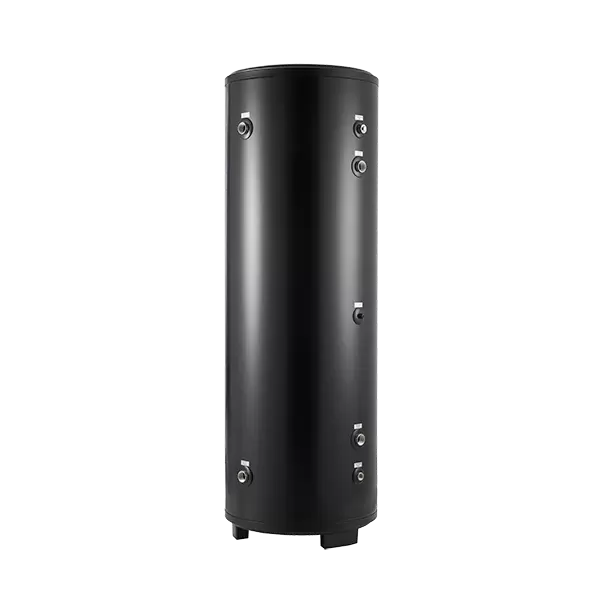
The right storage vessel depends on more than volume. Commercial projects often require careful consideration of material compatibility, operating pressure, temperature requirements, heat transfer performance, insulation, connection configuration, available installation space, and the selected heat source. These factors determine whether the tank can integrate smoothly into the overall hot water installation.
| Selection Factor | Why It Matters |
|---|---|
| Storage volume | Determines how much peak demand can be supported |
| Recovery capacity | Defines how quickly stored heat can be replenished |
| Heat exchange design | Influences heat transfer between the source and stored water |
| Insulation | Helps limit standing heat loss during storage |
| Tank material | Supports durability and water quality requirements |
| Working pressure | Must match the operating conditions of the installation |
| Connection layout | Affects integration with heat pumps, boilers, solar circuits and piping |
| Custom configuration | Helps accommodate project-specific space and heating requirements |
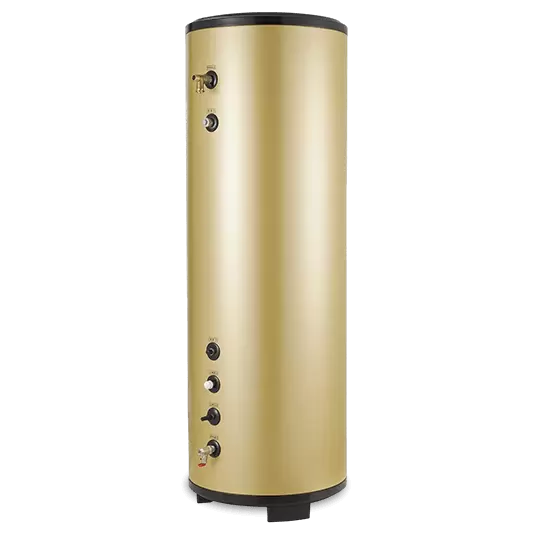
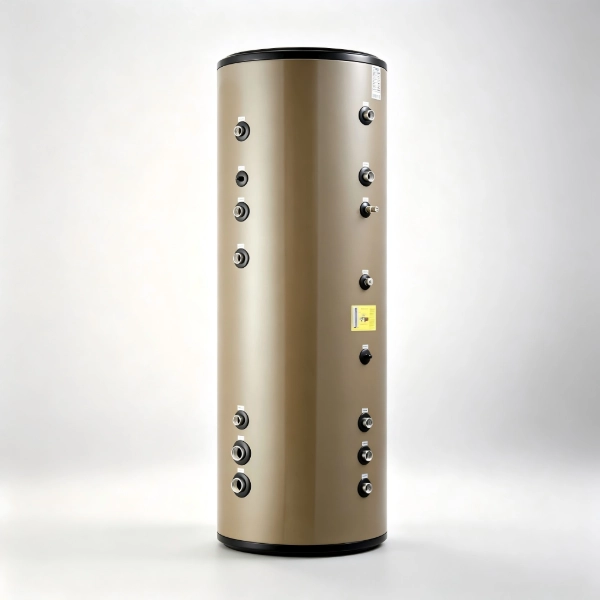
Legend provides stainless steel storage solutions using materials including SUS304, SUS316L and Duplex 2205, with options for different coil configurations and customized tank arrangements. The company's product range includes vessels designed for heat pump, solar, boiler and other thermal applications.
Thermal Storage for Heat Pump Water Heating
Heat pumps are increasingly considered for commercial hot water production because they can transfer ambient heat into water rather than relying exclusively on direct combustion or resistance heating. However, their operating characteristics make the relationship between heating capacity and storage particularly important.
A commercial hot water storage tank for heat pump applications can absorb heat during charging periods and release it when hot water demand increases. This helps the heat pump operate according to a planned schedule rather than constantly responding to rapid changes at the point of use. Thermal storage can therefore improve load matching and provide greater flexibility in commercial heat pump water heating installations.
Storage can also provide greater flexibility where electricity tariffs or demand-response strategies influence operating schedules. Instead of producing all required hot water at the exact moment it is consumed, the heating equipment can prepare stored thermal energy in advance and use that energy during higher-demand periods.
Stainless Steel Storage for Commercial Hot Water
Material selection is especially important when a tank will operate continuously in a commercial environment. A stainless steel hot water storage tank can provide corrosion resistance and structural durability while supporting different water heating configurations. The internal vessel, external enclosure, insulation and heat exchange components should be selected as a coordinated package rather than treated as unrelated parts.
Legend's commercial-oriented storage products use stainless steel inner tanks and offer different coil configurations, including flat coils, wave coils and coils designed for refrigerant-based heating applications. The company also states that its finished vessels undergo hydraulic pressure testing before delivery, with production quality control covering welding and leakage performance.
Integrating Solar Thermal and Multiple Heat Sources
Peak demand control does not have to depend on a single heating source. Commercial installations may combine heat pumps, solar thermal collectors, boilers or heat recovery equipment depending on the project's energy strategy. A storage vessel provides a central location where thermal energy can be accumulated before it is required at the point of consumption.
A commercial hot water storage tank for solar thermal systems can absorb useful heat generated during periods of solar availability and make that energy available when hot water is required. When solar output is insufficient, another heat source can provide supplementary heating. This type of multi-source arrangement can increase operating flexibility while making better use of available renewable heat.
Legend specifically positions its stainless steel storage tanks for commercial hot water projects and solar thermal engineering, while also offering vessels compatible with heat pumps and boilers.
Avoiding the Problems of Undersized or Oversized Storage
Storage that is too small may provide insufficient thermal reserve during concentrated demand periods. The heating equipment may then need to operate continuously while the tank temperature falls, reducing the available hot water reserve. On the other hand, excessive storage capacity can increase equipment cost, installation footprint, standby losses and unnecessary capital expenditure.
The objective is therefore not simply to select the largest possible commercial hot water storage tank. The better approach is to match storage volume with the actual peak load profile and the recovery capability of the connected heat source. Current technical guidance emphasizes evaluating hourly demand, seasonal variations, peak requirements and the ability of the heat source to recharge storage between demand periods.
Design Flexibility for Different Commercial Facilities
Commercial hot water requirements vary considerably between facilities. Hotels and lodging properties can experience concentrated morning and evening demand, while healthcare facilities may require dependable hot water availability across extended operating periods. Restaurants, sports facilities, residential developments, laundries and industrial operations can have completely different consumption patterns.
This makes custom commercial hot water storage tanks valuable for projects where standard configurations do not fully match the installation. Tank capacity, coil arrangement, connection positions, material selection and external finish can be adapted according to project requirements. Legend offers customization from 60L to 2000L and supports different coil types and external configurations for varying applications.
Why Thermal Storage Matters for Long-Term Operation
The value of a commercial storage vessel is not limited to providing additional water volume. It creates a thermal buffer between production and consumption, allowing the heating equipment to operate with greater control while the stored energy absorbs short-term fluctuations. This can be particularly useful when a facility combines high peak demand with heat pump technology or renewable energy sources.
A well-matched storage strategy can support stable hot water delivery, better load management, reduced equipment cycling and greater energy-use flexibility. It also gives engineers more options when balancing heating capacity, storage volume, available space and future operating requirements.
For commercial projects, Legend combines stainless steel tank construction with customizable heat exchange configurations and compatibility with heat pump, solar, boiler and heat recovery applications. This makes its storage vessels suitable for projects where thermal storage needs to be integrated into a broader hot water strategy rather than treated as an isolated component.
FAQ
What is a commercial hot water storage tank used for?
A commercial hot water storage tank stores heated water so that thermal energy is available when demand rises. It helps separate heat generation from immediate consumption and provides additional capacity during peak usage periods.
How does storage help control peak hot water demand?
The tank stores thermal energy before the peak period and releases it when multiple outlets require hot water simultaneously. This reduces the need for the heating equipment to respond entirely through instantaneous capacity.
Can a storage tank work with a commercial heat pump?
Yes. A properly sized tank can be integrated with a commercial heat pump water heating installation. The heat pump can charge the tank during suitable operating periods, while stored hot water supports higher-demand periods.
Can one tank work with multiple heat sources?
Depending on the tank configuration, multiple heating sources can be integrated through suitable heat exchange arrangements. Solar thermal, heat pumps, boilers and heat recovery equipment can be combined when the design and operating conditions are properly matched.
What should be considered when choosing a commercial hot water storage tank?
Important factors include peak demand, storage volume, heat source recovery capacity, operating temperature, working pressure, tank material, insulation, heat exchange configuration, installation space and connection requirements. A complete load assessment should be carried out before selecting the tank capacity.
Does Legend provide customized commercial storage tanks?
Yes. Legend offers customizable stainless steel water tanks with different capacities, materials, coil configurations, outer shell options and connection arrangements. Its product range is designed for commercial hot water, heat pump, solar thermal, boiler and related thermal storage applications.