
 English
  繁体中文
繁体中文  Spanish
  Hungarian
  Serbian
  Slovak
  Slovenian
  Romanian
  Dutch
Dutch  Russian
  Bulgarian
  Кыргызча
  O'zbekcha
 Hydronic heating systems are widely used in residential, commercial, and industrial buildings because they provide stable indoor comfort, high energy efficiency, and flexible system design. As heat pump technology continues to gain popularity worldwide, more engineers, contractors, and project developers are paying attention to one critical component that often determines overall system stability: the hydronic heating buffer tank.
Although it may seem like a simple storage vessel, a buffer tank plays a significant role in maintaining system efficiency, reducing equipment wear, improving temperature control, and supporting the long-term operation of modern heating systems. Whether the project involves a residential heat pump, a commercial building, or a multi-zone heating network, understanding the purpose and application of a hydronic heating buffer tank can help decision-makers design more reliable systems.
This article explains how a hydronic heating buffer tank works, where it should be installed, and what factors should be considered when selecting one for a heating project.
Understanding the Role of a Hydronic Heating Buffer Tank
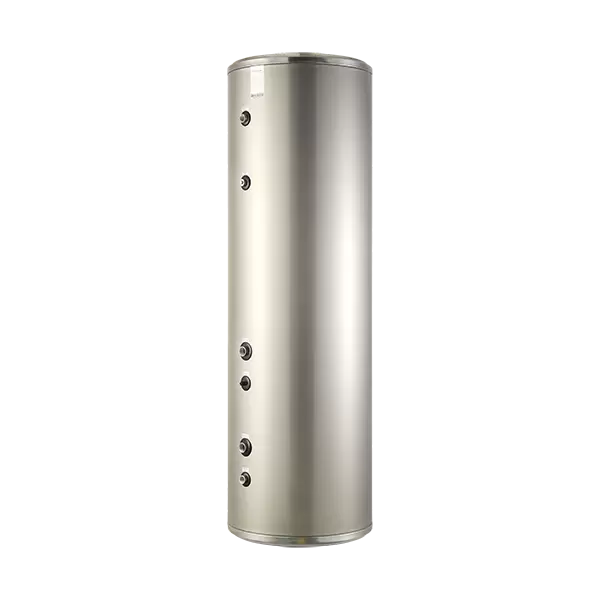
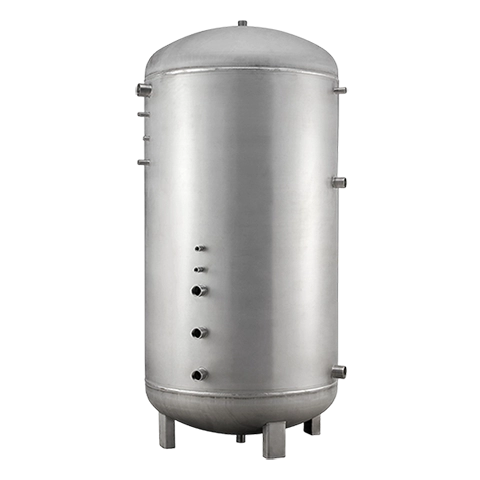
A hydronic heating buffer tank is a thermal storage vessel installed within a water-based heating system. Its primary purpose is to increase the system's water volume and store thermal energy for later use.
In many modern heating applications, especially those using air source heat pumps, heating demand can fluctuate throughout the day. When heating loads are lower than the minimum output capacity of the heat source, the equipment may repeatedly start and stop. This phenomenon, commonly known as short cycling, can significantly reduce efficiency and shorten equipment lifespan.
The buffer tank helps solve this problem by acting as a thermal reservoir. It absorbs excess heat when the heating source is operating and releases stored heat when demand decreases or temporarily exceeds production.
In simple terms, a hydronic heating buffer tank helps balance heat generation and heat consumption within the system.
Why Modern Heat Pump Systems Need Buffer Tanks
Heat pumps operate differently from conventional boilers.
Traditional boilers can often respond quickly to changing loads and operate across a broad range of output levels. Heat pumps, however, perform best when operating steadily over extended periods.
Frequent on-off cycles can create several challenges:
Reduced seasonal efficiency
Increased compressor wear
Higher electricity consumption
Unstable water temperatures
Poor indoor comfort
A properly sized hydronic heating buffer tank minimizes these issues by providing additional thermal mass.
When heat demand drops, the heat pump can continue running efficiently while transferring energy into the tank. When demand rises again, the stored energy is released back into the system.
This operating principle allows the heat pump to run longer cycles at optimal efficiency rather than constantly starting and stopping.
Key Functions of a Hydronic Heating Buffer Tank
Increase System Water Volume
Many modern heating systems have relatively small water content due to compact piping layouts and efficient terminal units.
Insufficient water volume can cause temperature fluctuations and unstable operation.
Adding a hydronic heating buffer tank increases the total water capacity of the system, helping maintain more consistent temperatures and smoother operation.
Prevent Short Cycling
Short cycling is one of the most common reasons for premature equipment failure in heat pump installations.
Every startup cycle places stress on compressors, pumps, valves, and electrical components.
The buffer tank extends operating cycles by storing excess thermal energy, reducing the number of starts and stops throughout the day.
Improve Temperature Stability
Buildings rarely have perfectly constant heating loads.
Weather conditions, occupancy levels, solar gains, and internal equipment all influence heating demand.
A hydronic heating buffer tank helps absorb these fluctuations and maintain stable supply temperatures, improving occupant comfort.
Support Multi-Zone Heating Systems
Many commercial and residential projects use multiple heating zones.
For example:
Floor heating zones
Radiator circuits
Fan coil units
Domestic hot water preheating loops
Each zone may have different flow requirements and operating schedules.
A buffer tank can act as a hydraulic separator, helping balance flow rates between the heat source and various distribution circuits.
Enhance Heat Pump Efficiency
Heat pumps achieve their highest efficiency when operating under steady conditions.
The buffer tank reduces system instability and helps maintain favorable operating conditions, contributing to improved seasonal performance.
How a Hydronic Heating Buffer Tank Works
The operating principle is relatively straightforward.
When the heat source produces more energy than the building currently requires:
Heated water enters the buffer tank.
Thermal energy is stored within the water volume.
The tank temperature gradually rises.
When heating demand exceeds immediate production:
Stored hot water leaves the tank.
Energy is delivered to heating circuits.
The heat source can continue operating smoothly without rapid cycling.
The buffer tank essentially acts as a bridge between energy production and energy consumption.
This decoupling function becomes increasingly important in variable-load applications.
Common Applications of Hydronic Heating Buffer Tanks
Air Source Heat Pump Systems
Air source heat pumps are among the most common applications.
Outdoor temperatures often fluctuate significantly throughout the heating season.
A hydronic heating buffer tank helps stabilize system operation and supports defrost cycles, improving overall reliability.
Ground Source Heat Pump Systems
Ground source heat pumps typically operate under more stable conditions, but buffer tanks are still frequently used to improve load management and hydraulic separation.
Commercial Buildings
Commercial properties often experience varying occupancy levels and changing heating demands.
Examples include:
Office buildings
Hotels
Schools
Hospitals
Shopping centers
A buffer tank helps smooth load variations and improve operational efficiency.
Residential Heating Systems
Single-family homes and apartment buildings increasingly use heat pumps combined with:
Underfloor heating
Radiators
Mixed-temperature circuits
A hydronic heating buffer tank helps coordinate these systems while maintaining comfort.
Industrial Heating Applications
Industrial facilities often require precise temperature control and stable thermal supply.
Buffer tanks provide thermal storage and help manage process heating loads.
Buffer Tank vs. Hot Water Storage Tank
These two products are sometimes confused, but they serve different purposes.
Hydronic Heating Buffer Tank
Main purpose:
Thermal storage for heating systems
Increase water volume
Stabilize heat pump operation
Improve hydraulic balance
The water inside the tank usually circulates directly through the heating system.
Domestic Hot Water Storage Tank
Main purpose:
Store potable hot water
Supply showers, faucets, and sanitary applications
These tanks are designed specifically for domestic water consumption.
While both products store heated water, their design, operating conditions, and intended uses are different.
Factors to Consider When Selecting a Hydronic Heating Buffer Tank
Choosing the correct tank requires more than simply selecting a storage volume.
Several technical factors should be evaluated.
Tank Capacity
Tank size directly affects system performance.
An undersized tank may not provide sufficient thermal storage.
An oversized tank may increase installation costs and heat loss.
Sizing should consider:
Heat pump capacity
Minimum run time requirements
System water volume
Building load characteristics
Professional calculations are recommended for commercial projects.
Material Quality
The tank material affects durability and service life.
Common options include:
Carbon steel
Stainless steel
Glass-lined steel
The choice depends on water quality, operating conditions, and project requirements.
Insulation Performance
Thermal insulation reduces standby heat losses.
High-quality insulation helps retain stored energy and improve overall efficiency.
Important considerations include:
Insulation thickness
Thermal conductivity
Moisture resistance
Pressure Rating
The hydronic heating buffer tank must meet the pressure requirements of the entire system.
Engineers should verify:
Maximum working pressure
Design pressure
Compliance with local standards
Connection Configuration
Different projects require different connection arrangements.
Examples include:
Two-port configurations
Four-port configurations
Top-bottom connections
Side connections
Proper connection design supports hydraulic balance and simplifies installation.
Installation Space
Physical dimensions should be evaluated during project planning.
Consider:
Equipment room layout
Access routes
Maintenance space
Ceiling height restrictions
Typical Buffer Tank Installation Configurations
Two-Pipe Buffer Tank Configuration
In this arrangement, the tank is connected in series with the heating circuit.
Advantages:
Simple installation
Lower piping complexity
Suitable for smaller systems
Limitations:
Less hydraulic separation capability
Four-Pipe Buffer Tank Configuration
This design provides stronger hydraulic separation between the heat source and distribution system.
Advantages:
Improved flow balancing
Better temperature management
Suitable for multi-zone systems
Many commercial projects prefer this configuration.
Parallel Buffer Tank Arrangement
Parallel designs are often used in larger systems requiring greater flexibility and capacity.
They allow easier expansion when future heating demands increase.
The Relationship Between Buffer Tanks and Heat Pump Defrost Cycles
One often overlooked benefit of a hydronic heating buffer tank is its support for heat pump defrost operation.
During cold weather, frost can accumulate on outdoor heat exchanger surfaces.
The heat pump periodically initiates a defrost cycle to remove this frost.
During defrost:
Heating output may temporarily decrease.
Indoor comfort may be affected.
System temperatures can fluctuate.
A buffer tank stores thermal energy that can be used during these periods, helping maintain consistent heating performance.
This benefit becomes especially valuable in cold climate applications.
Common Mistakes When Selecting a Buffer Tank
Choosing Capacity Based Only on Price
Selecting the smallest available tank to reduce initial investment can lead to poor system performance.
Proper sizing should always consider actual operating conditions.
Ignoring Insulation Quality
A low-cost tank with inadequate insulation may create unnecessary energy losses throughout its service life.
Long-term operating costs should be evaluated alongside purchase price.
Overlooking Hydraulic Design
Even the best hydronic heating buffer tank cannot compensate for poor system design.
Flow rates, pump sizing, pipe dimensions, and control strategies must all be coordinated.
Neglecting Future Expansion
Commercial projects often evolve over time.
Selecting a tank with some capacity margin can simplify future system upgrades.
Maintenance Requirements for Hydronic Heating Buffer Tanks
Buffer tanks generally require minimal maintenance, but periodic inspections remain important.
Recommended practices include:
Visual Inspection
Check for:
Corrosion
Leakage
Damaged insulation
Connection issues
Pressure Monitoring
Verify that operating pressure remains within design limits.
Unexpected pressure changes may indicate system problems.
Water Quality Control
Poor water quality can accelerate corrosion and reduce equipment lifespan.
Monitor:
pH levels
Oxygen content
Water hardness
Inhibitor concentrations
Insulation Inspection
Damaged insulation increases heat loss and reduces efficiency.
Repair or replace insulation when necessary.
Benefits for Building Owners and Facility Managers
Investing in a properly designed hydronic heating buffer tank can provide several long-term advantages.
Lower Operating Costs
Improved heat pump efficiency helps reduce energy consumption.
Extended Equipment Lifespan
Reduced cycling minimizes wear on compressors and pumps.
Better Indoor Comfort
Stable water temperatures contribute to more consistent room conditions.
Improved System Reliability
Buffer tanks help manage changing loads and reduce operational stress.
Greater Design Flexibility
Engineers can integrate multiple heating circuits more effectively.
Why Product Quality Matters
Not all buffer tanks deliver the same performance.
For B2B buyers, quality considerations should include:
Manufacturing consistency
Material selection
Welding quality
Pressure testing procedures
Insulation technology
Compliance certifications
A reliable supplier should provide detailed technical specifications, quality assurance documentation, and engineering support throughout the project lifecycle.
For international distributors, HVAC contractors, system integrators, and project developers, selecting a dependable manufacturing partner can reduce installation risks and improve long-term customer satisfaction.
Conclusion
A hydronic heating buffer tank is far more than a simple storage vessel. It serves as a critical component that improves thermal stability, reduces short cycling, enhances heat pump efficiency, and supports reliable system operation across a wide range of heating applications.
As heat pumps continue to replace traditional heating technologies in residential, commercial, and industrial buildings, the importance of proper thermal storage becomes increasingly apparent. A well-designed buffer tank can help maximize system performance, lower operating costs, and extend equipment lifespan.
With more than two decades of experience in heat pump water storage solutions, Legend Electric focuses on delivering dependable buffer tank products designed to meet the practical needs of modern hydronic heating systems. By combining manufacturing expertise, strict quality control, and continuous product development, the company supports global partners seeking stable, efficient, and long-lasting heating solutions for diverse building applications.