
 English
 繁体中文
 Spanish
 Hungarian
 Serbian
 Slovak
 Slovenian
 Romanian
 Dutch
 Russian
 Bulgarian
 Кыргызча
 O'zbekcha
Why Heat Pumps Need Buffer Tank to Control Short Cycling
Heat pump short cycling occurs when heating or cooling equipment starts and stops more frequently than intended. One common contributing factor is insufficient water volume, which allows circulating water to reach the target temperature too quickly. Repeated compressor starts can increase mechanical stress, cause temperature fluctuations, and reduce operating efficiency. A properly selected buffer tank for heat pump applications adds thermal capacity to help moderate these changes and support more stable operation.
Short cycling can also result from incorrect equipment sizing, restricted water flow, control settings, or changing demand from individual heating zones. Adding a buffer tank is therefore not a universal solution to every operating problem. Its effectiveness depends on the relationship between heat pump output, available water volume, temperature settings, and the hydraulic design of the installation.
How Buffer Tank for Heat Pump Applications Stabilizes Temperature
A buffer tank increases the volume of water available to absorb and retain thermal energy during heating or cooling. When the heat pump operates, the additional water takes longer to reach the control temperature, potentially extending the operating cycle. When demand changes, the stored thermal energy can help moderate temperature fluctuations and reduce rapid changes in operating conditions.
For hydronic heating, this additional capacity can be particularly useful when the connected circuits have limited water volume or when heating zones open and close throughout the day. A heat pump buffer tank can help maintain more consistent water temperatures, provided its capacity and connections are appropriate for the equipment. The aim is not simply to store more water, but to create operating conditions that support the heat pump's intended performance.
Choosing the Right Buffer Tank Capacity
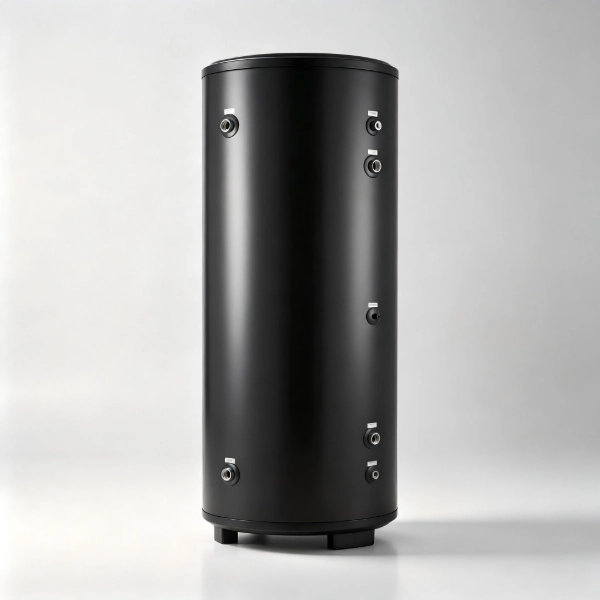
Selecting the correct capacity requires an assessment of the heat pump's operating characteristics rather than relying only on its nominal heating output. Important factors include minimum heat output, required operating duration, allowable temperature differential, existing pipework volume, and manufacturer-specified minimum water volume. These details determine how much additional thermal capacity is needed to reduce frequent starts.
An undersized tank may provide limited improvement, while an unnecessarily large tank can increase purchase costs, installation space, and standby heat loss. For this reason, buffer tank sizing for heat pumps should be based on technical requirements and expected operating conditions. A qualified installer or designer can evaluate these factors to determine a suitable capacity for the intended application.
Selection factor | Why it matters |
|---|---|
Minimum heat pump output | Influences how quickly the water temperature rises |
Available water volume | Determines the thermal capacity already present in the circuit |
Temperature differential | Affects the amount of energy stored in the water |
Required operating duration | Helps establish the additional volume needed |
Water flow rate | Influences heat transfer and temperature distribution |
Heating zone configuration | Changes circulation requirements as zones open or close |
Hydraulic Design and Flow Rate Considerations
Water flow is essential to stable heat pump operation. If the circulation rate falls below the equipment's required minimum, heat transfer may become inadequate and protective controls may interrupt operation. This can happen when valves close, filters become restricted, or the heating circuit is incorrectly configured. A buffer tank may help accommodate changing flow requirements when integrated appropriately, but it cannot replace correct pipework design or adequate circulation.
The tank's connection arrangement, pumps, valves, and temperature sensors should work together according to the heat pump manufacturer's recommendations. In installations with multiple heating zones, the design should account for changes in demand without compromising the required flow through the heat pump. Correct hydraulic integration allows a buffer tank for hydronic heat pumps to contribute to temperature stability while supporting the equipment's operating requirements.
Why Stainless Steel Is a Practical Material Choice
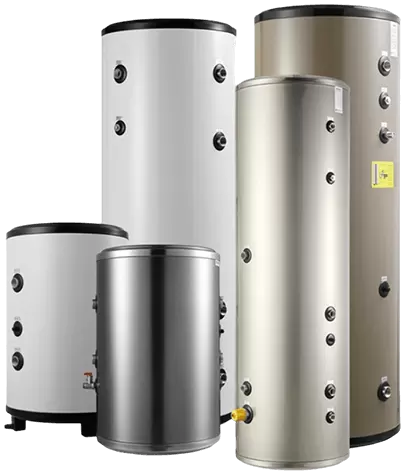
Material selection affects corrosion resistance, durability, maintenance requirements, and suitability for different water conditions. A stainless steel buffer tank offers a durable vessel option for residential, commercial, and industrial heating or cooling applications. The appropriate stainless steel grade depends on the water chemistry, operating environment, and project specifications.
Legend offers SUS304, SUS316L, and Duplex 2205 material options. SUS304 is commonly used for general applications where its corrosion resistance is suitable, while SUS316L may be preferable in certain more corrosive environments. Duplex 2205 can be considered where its strength and corrosion-resistance characteristics meet the application requirements. Buyers should evaluate the actual water composition and operating conditions before choosing a material grade.
Insulation and Energy Performance
Thermal insulation reduces heat transfer between the stored water and the surrounding environment. In heating applications, effective insulation helps preserve useful thermal energy during standby periods and limits unnecessary heat loss. This can support overall energy performance, although the actual benefit depends on insulation quality, ambient temperature, water temperature, and operating patterns.
Insulation and short-cycle prevention serve different purposes. Additional water volume moderates temperature changes, while insulation limits energy loss from the tank. A well-insulated vessel may still fail to reduce frequent compressor starts if its capacity is insufficient or the controls are incorrectly configured. When choosing a buffer tank for heat pump heating, buyers should consider both thermal capacity and insulation performance rather than treating either feature as a complete solution.
Selecting a Buffer Tank for Different Applications
Residential heat pumps, commercial HVAC installations, underfloor heating circuits, and industrial cooling applications have different operating requirements. Residential projects may prioritize compact dimensions and straightforward installation, whereas commercial projects may require greater capacity, specific connections, or materials suited to more demanding water conditions. The tank should be selected according to the actual application rather than capacity alone.
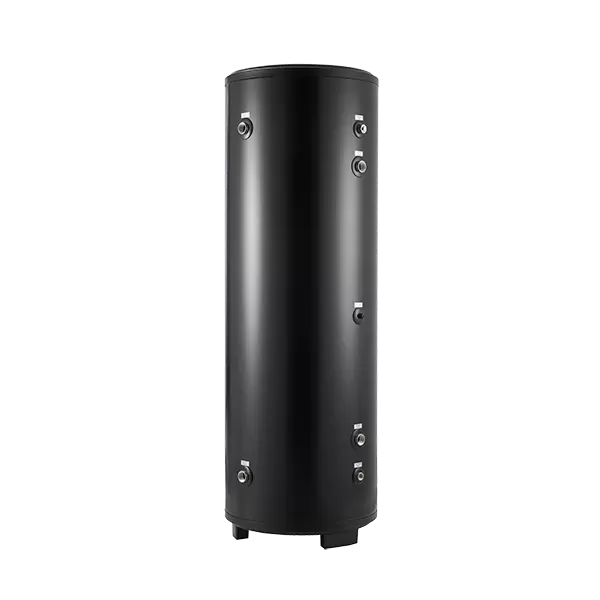
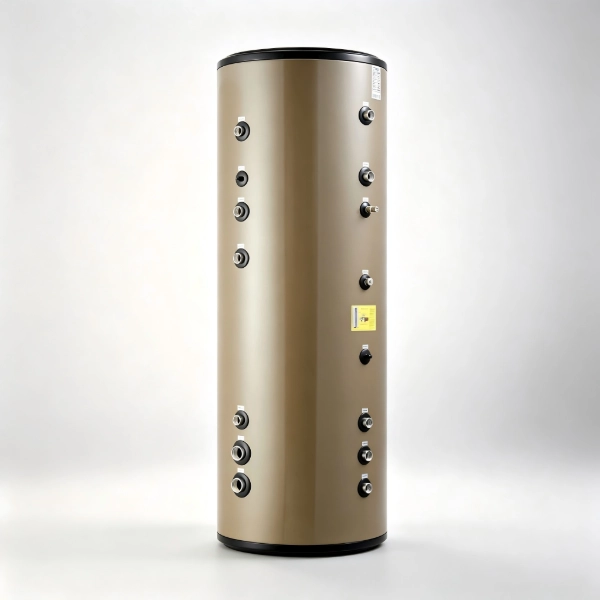
Legend provides buffer tank capacities ranging from 60L to 2000L, with different material and installation options available. Before ordering, buyers should confirm working pressure, operating temperature, connection locations, insulation arrangement, and available installation space. For OEM manufacturers and HVAC contractors, discussing these requirements with a buffer tank manufacturer can help ensure the selected vessel matches the intended heating or cooling application.
Installation and Maintenance for Reliable Operation
Correct installation is essential to achieving the expected benefits. The tank should be connected according to the heat pump manufacturer's hydraulic recommendations, with appropriate attention to circulation, air removal, sensor placement, and pressure control. Installers should also verify that adequate flow is maintained as heating demand changes and individual zones open or close.
Routine inspection should include checking connections for leakage, examining insulation for damage, and confirming that the water circuit maintains the required pressure and flow. If short cycling continues after installation, the cause may involve equipment sizing, control settings, sensor readings, or restricted circulation. Identifying the underlying problem is essential because a buffer tank is most effective when it forms part of a correctly designed and controlled installation.
FAQ
Does every heat pump need a buffer tank?
No. Whether a buffer tank is necessary depends on the heat pump's minimum water-volume requirements, the volume of the connected pipework, the hydraulic arrangement, and the variation in heating demand. The manufacturer's installation guidance should determine whether additional capacity is required.
How does a buffer tank reduce heat pump short cycling?
It adds water volume that absorbs thermal energy and slows temperature changes. This can extend operating cycles when insufficient water volume is contributing to frequent starts, although other causes may require separate adjustments.
How do I calculate the required buffer tank size?
Capacity selection should account for minimum heat pump output, desired operating duration, allowable temperature differential, and existing water volume. Manufacturer specifications and professional sizing calculations are preferable to generic capacity estimates.
Is a stainless steel buffer tank suitable for underfloor heating?
Yes, it can be suitable when the tank capacity, connections, pressure rating, and hydraulic design meet the requirements of the underfloor heating installation and the connected heat pump.
What should buyers consider when choosing a buffer tank supplier?
Evaluate material options, welding quality, pressure and leakage testing, insulation performance, customization capabilities, and technical support. These factors help determine whether a supplier can meet the project's operating and durability requirements.
A correctly selected buffer tank for heat pump applications can help reduce short cycling, moderate water temperature fluctuations, and support more stable heating or cooling performance. Legend offers a range of capacities and stainless steel options to meet different project requirements, helping HVAC contractors, equipment manufacturers, and procurement teams identify a suitable buffer tank solution.