
 English
  繁体中文
繁体中文  Spanish
  Hungarian
  Serbian
  Slovak
  Slovenian
  Romanian
  Dutch
Dutch  Russian
  Bulgarian
  Кыргызча
  O'zbekcha
 Heat transfer efficiency depends on more than the heat source itself. The internal structure, heat exchanger configuration, water circulation, insulation, and material selection all influence how effectively a stainless steel hot water tank transfers and retains thermal energy. For heat pump installations, solar thermal applications, and commercial hot water projects, these factors affect heating time, temperature stability, and operating costs.
A well-designed tank should match the heating source, required hot water demand, and installation conditions. Legend provides stainless steel tank solutions for different thermal storage and hot water applications, with design options that help engineers and buyers select equipment according to project requirements.
How Tank Structure Influences Heat Transfer
The internal geometry of a hot water tank affects how heated water moves and how temperature differences develop throughout the vessel. Poor circulation may create uneven temperatures, leaving some water insufficiently heated while increasing the time needed to meet demand. Appropriate inlet positioning, outlet placement, and tank proportions help support more consistent thermal distribution.
A stainless steel hot water tank for heat pump applications must also accommodate the operating characteristics of the heat source. Correctly matched water volume and heat exchanger capacity help maintain effective heat exchange without unnecessarily extending heating cycles. The best design is therefore determined by the complete application rather than tank capacity alone.
Heat Exchanger Design and Thermal Performance
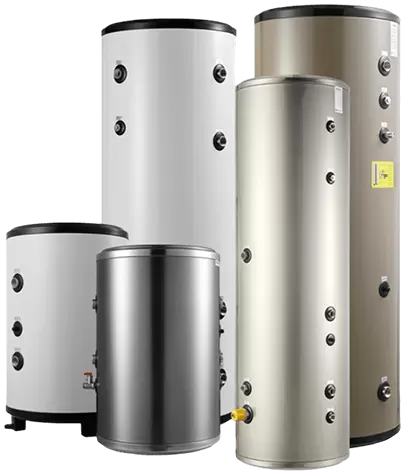
Heat exchanger configuration is a major consideration when selecting a hot water storage tank. A coil transfers heat between two fluid circuits without requiring them to mix, making it suitable for heat pumps, solar thermal collectors, and other indirect heating applications. Coil surface area, tube arrangement, flow conditions, and the temperature difference between fluids all influence heat transfer performance.
A larger coil does not automatically guarantee better results. Its effectiveness also depends on fluid flow, available temperature difference, and the heat source's output. Buyers evaluating a stainless steel hot water tank with heat exchanger coil should confirm that the coil is designed for the intended heating source and operating conditions.
| Design factor | Influence on performance |
|---|---|
| Coil surface area | Affects the available area for heat exchange |
| Water circulation | Influences temperature distribution inside the tank |
| Heating source output | Determines the rate of energy supplied |
| Tank insulation | Reduces heat loss during storage |
| Inlet and outlet layout | Affects circulation and usable hot water delivery |
Stainless Steel Selection and Long-Term Reliability
Material selection affects durability, corrosion resistance, and maintenance requirements. Stainless steel grades differ in their resistance to specific water chemistries and operating environments, so the appropriate grade should be selected according to water quality, temperature, and project conditions. SS304 and SS316L are common options, while Duplex 2205 may suit applications requiring different mechanical or corrosion-resistance characteristics.
The tank material alone does not determine service life. Weld quality, fabrication consistency, surface condition, and the compatibility of fittings and connections are also important. For a commercial stainless steel hot water tank, these details deserve attention because frequent operation and demanding service conditions can expose weaknesses in construction over time.
Insulation and Heat Retention
Efficient heat transfer into stored water is only part of the performance equation. Once the water reaches the required temperature, insulation helps limit energy escaping through the tank walls. Inadequate insulation can increase reheating demand, particularly where hot water must remain available throughout the day or overnight.
Buyers should assess insulation thickness, material performance, coverage around connections, and the quality of the outer casing. A stainless steel hot water storage tank with suitable insulation can help maintain stored water temperature for longer periods, although actual heat loss also depends on ambient temperature, tank size, and operating conditions.
Matching Tank Design to the Heating Application
Different heating sources place different demands on storage equipment. Heat pumps generally benefit from a tank and coil combination matched to their output and temperature range. Solar thermal installations must accommodate variable energy availability, while commercial buildings may require sufficient storage to handle concentrated periods of hot water consumption.
A buffer tank serves a different purpose from a domestic hot water tank. It primarily supports heating or cooling circuit operation by adding water volume, whereas a domestic hot water tank stores water intended for use. Some combined designs integrate a coil-equipped hot water chamber with a separate buffer section, helping accommodate multiple thermal functions within a single footprint.
What Buyers Should Check Before Ordering
Before purchasing a stainless steel tank, confirm the required storage capacity, heat source, working pressure, operating temperature, connection layout, and available installation space. The specification should also identify whether the application requires direct water heating, indirect heat exchange, buffer storage, or a combination of functions.
For OEM and project-based procurement, customization may include tank dimensions, coil configuration, connection positions, insulation, exterior finish, and branding. Legend offers tank options for heat pump, solar thermal, and other hot water applications. Buyers should request the relevant drawings and technical specifications to verify compatibility before confirming an order.
Quality checks also matter. Welding inspection, pressure testing, leakage testing, and verification of the finished connections help reduce installation risks. Confirming these requirements before production makes it easier to align the delivered tank with the project's technical and commercial expectations.
Frequently Asked Questions
Does stainless steel improve hot water tank heat transfer?
Stainless steel provides a durable tank construction, but heat transfer performance depends more directly on the heat exchanger design, fluid circulation, temperature difference, and overall tank configuration.
Is a coil necessary in a stainless steel hot water tank?
A coil is commonly used when heat must pass from a separate circuit into stored water, such as in heat pump or solar thermal applications. The required configuration depends on the heating method.
How can a hot water tank reduce heat loss?
Suitable insulation, well-sealed connections, and appropriate installation help reduce heat escaping during storage. Insulation performance and installation quality should be evaluated together.
What should buyers consider when choosing a tank manufacturer?
Check material specifications, working pressure, available configurations, fabrication quality, testing procedures, customization capabilities, and technical support. Matching the tank to the actual application is essential for reliable operation.
Selecting the right stainless steel hot water tank requires balancing heat exchange, thermal storage, insulation, material compatibility, and installation requirements. With application-specific specifications and appropriate quality checks, buyers can choose a tank that supports effective heating performance and dependable long-term service.