
 English
 繁体中文
 Spanish
 Hungarian
 Serbian
 Slovak
 Slovenian
 Romanian
 Dutch
 Russian
 Bulgarian
 Кыргызча
 O'zbekcha
Role of Buffer Water Tank Design in Heating Performance
Heating efficiency depends on more than the heat source itself. Water volume, temperature stability, heat transfer, and circulation all influence how effectively thermal energy is distributed. A buffer water tank helps manage these factors by providing additional water capacity and reducing the impact of sudden heating demand changes. Its design determines how effectively it performs this function under different operating conditions.
An appropriately designed tank can help reduce frequent equipment cycling, maintain more consistent water temperatures, and improve the coordination between heat generation and heat consumption. These benefits are particularly relevant to heat pumps, gas boilers, hydronic heating, and other applications where heating demand changes throughout the day. For property owners and equipment purchasers, understanding tank design is an important step toward achieving dependable heating performance.
How Water Capacity Influences Heating Efficiency
Water capacity is one of the most important considerations when selecting a heating buffer tank. If the available water volume is insufficient, temperature changes can occur rapidly whenever heating demand fluctuates. This may cause the heat source to start and stop more frequently, potentially increasing component wear and reducing operating efficiency.
A suitable capacity provides additional thermal storage, allowing the heating equipment to operate with more stable water conditions. However, selecting a larger tank does not automatically guarantee better performance. Excessive capacity may increase initial heating time, installation requirements, and unnecessary heat storage. The correct volume should therefore reflect the heat source, required flow rate, operating temperature difference, and actual heating demand.
Internal Structure and Water Temperature Stability
The internal structure of a tank affects how water circulates and how effectively temperature fluctuations are managed. Connection positions, inlet and outlet arrangements, and internal flow conditions can influence water movement during heating and circulation. A carefully designed structure helps maintain practical hydraulic performance while supporting consistent temperature delivery.
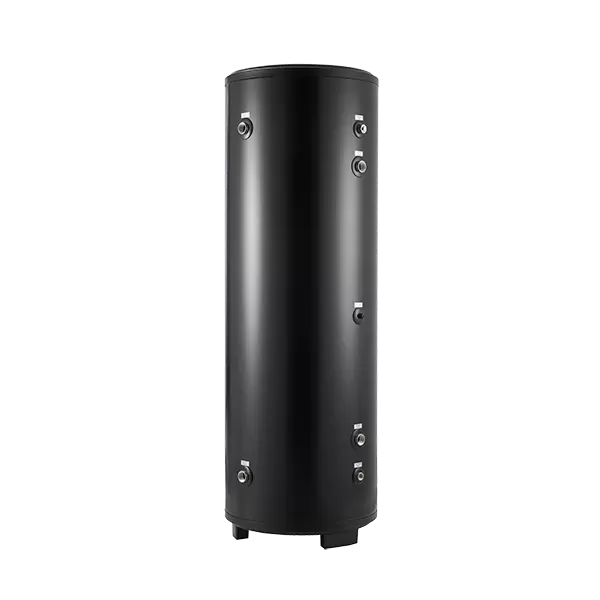
A coil-free buffer water tank offers a relatively straightforward construction without an internal heat exchange coil. This design can reduce manufacturing complexity and procurement costs while providing additional water volume for heating or cooling applications. It is particularly suitable when the primary purpose is to increase water capacity and balance temperature fluctuations rather than transfer heat between separate fluid circuits.
Insulation Quality and Heat Loss Control
Even when a heating tank has an appropriate capacity, insufficient insulation can reduce its overall contribution to energy efficiency. Heat naturally moves from warmer surfaces toward cooler surroundings, meaning an inadequately insulated tank continuously loses stored thermal energy. These losses may increase the workload required from the heat source, particularly when the tank operates continuously.
High-quality insulation helps maintain stored water temperature and reduces unnecessary heat loss during standby periods. Buyers should consider insulation thickness, material consistency, surface coverage, and long-term durability rather than focusing only on the appearance of the outer shell.
Fluorine-free insulation is another consideration for projects with environmental requirements. Legend incorporates fluorine-free insulation materials into its buffer tank offering, supporting reduced heat loss and more environmentally conscious product selection.
Material Selection for Long-Term Performance
The inner tank material influences corrosion resistance, durability, maintenance requirements, and suitability for different water conditions. Stainless steel is widely used in heating applications because it offers a practical combination of strength, corrosion resistance, and manufacturing flexibility.
Material | Main characteristics | Typical considerations |
|---|---|---|
SS304 | General corrosion resistance and durability | Common heating applications |
SS316L | Enhanced resistance to chloride-related corrosion | More demanding water conditions |
Duplex 2205 | High strength and corrosion resistance | Specialized industrial applications |
Choosing the appropriate stainless steel grade requires consideration of water chemistry, operating conditions, and expected service life. A higher-grade material is not necessarily required for every installation. Matching material properties with actual operating conditions helps control procurement costs without compromising long-term reliability.
Vertical and Wall-Mounted Designs for Different Installations
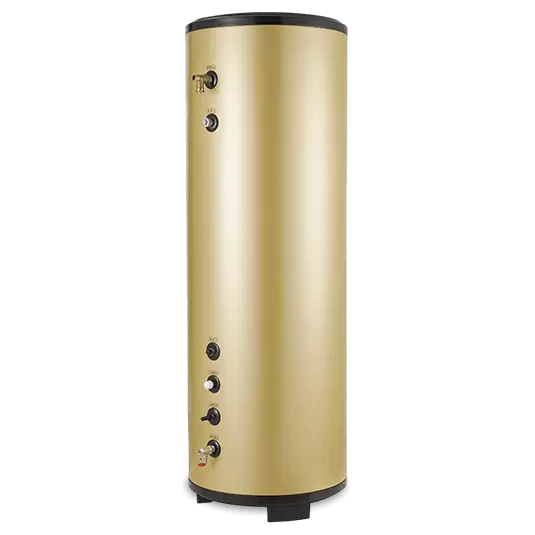
Physical configuration also influences the practicality of a heating installation. A vertical floor-standing tank is often suitable for mechanical rooms and plant areas where sufficient floor space is available. Its upright structure can accommodate larger water volumes while maintaining a relatively compact footprint.
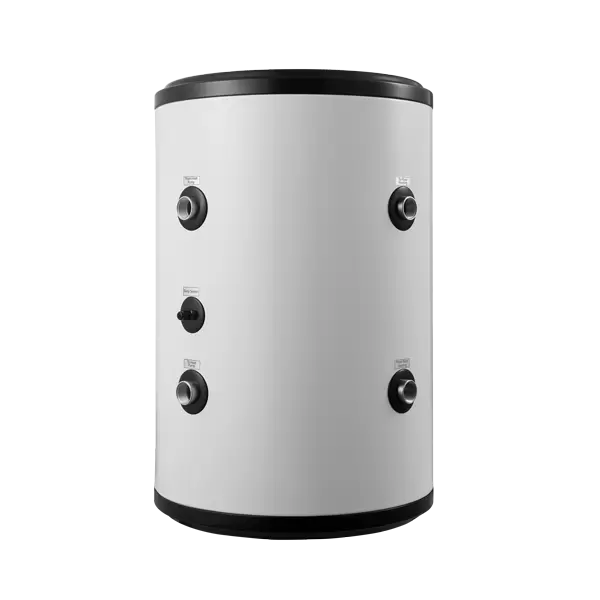
Wall-mounted designs provide another option where floor space is limited. They can be useful in compact utility rooms and residential heating installations, provided the supporting wall and mounting arrangement are suitable for the filled tank weight.
When comparing different buffer tank designs, buyers should consider connection accessibility, maintenance clearance, piping layout, transportation, and installation conditions. A tank that fits the available space but makes pipe connections difficult may create unnecessary installation costs.
Matching Tank Design with Different Heating Applications
Different heating applications place different demands on water storage and temperature management. A heat pump buffer tank, for example, can help increase water volume and reduce the effects of changing heating demand. This is particularly important when the heat pump operates under variable load conditions.
Gas boiler applications may also benefit from additional water capacity when heating demand changes frequently. In cooling and refrigeration applications, a cooling buffer tank helps balance chilled water demand and temperature fluctuations, supporting more consistent operation of connected equipment.
Solar heating and heat recovery applications introduce additional considerations because energy availability may vary throughout the day. Tank capacity, insulation, material selection, and hydraulic connections should all be evaluated according to the intended application.
Key Design Factors When Selecting a Buffer Tank
A practical purchasing decision should consider the complete installation rather than evaluating individual specifications separately. The following factors provide a useful reference for comparing different products.
Design factor | What buyers should evaluate | Efficiency-related benefit |
|---|---|---|
Water capacity | Actual heating demand and flow conditions | More stable water temperature |
Internal structure | Coil-free or customized coil arrangement | Suitable hydraulic configuration |
Insulation | Material and coverage | Reduced standby heat loss |
Inner material | SS304, SS316L or Duplex 2205 | Long-term durability |
Installation type | Vertical or wall-mounted | Better space utilization |
Connection design | Pipe arrangement and accessibility | Easier installation and maintenance |
Considering these factors together helps prevent common purchasing mistakes, such as choosing capacity based only on price or selecting materials without evaluating water quality. It also allows distributors, contractors, and project purchasers to compare products according to actual application requirements.
Why Manufacturing Quality Matters
Design advantages can only deliver consistent results when manufacturing quality is properly controlled. Welding accuracy, connection integrity, material consistency, and pressure testing all influence the reliability of a stainless steel heating tank. Poor workmanship may lead to leakage risks, maintenance difficulties, and unexpected operating interruptions.
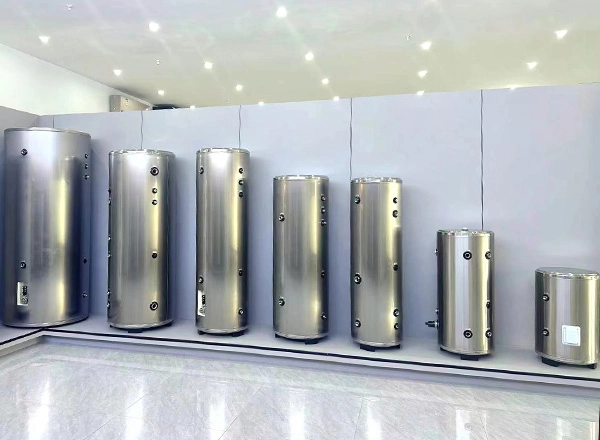
At Legend, buffer tank manufacturing combines stainless steel material options with different structural configurations and customization possibilities. The company supports capacities from 60L to 2000L and offers SS304, SS316L, and Duplex 2205 inner tank materials. Its quality control process includes online leakage testing and pressure holding inspections, helping ensure product integrity before delivery.
For international buyers, these manufacturing considerations are particularly important when sourcing a buffer water tank manufacturer for residential, commercial, or industrial heating projects. Consistent quality, flexible customization, and appropriate technical support can all contribute to a more dependable purchasing decision.
FAQ
Q1: How does a buffer water tank improve heating efficiency?
A buffer water tank increases available water volume, helping stabilize temperature fluctuations and reduce frequent heating equipment cycling. Its actual contribution depends on capacity, insulation, hydraulic design, and operating conditions.
Q2: How do I choose the right buffer tank capacity?
Capacity should be determined according to heat source output, minimum operating requirements, flow rate, temperature difference, and heating demand. Professional sizing is recommended to avoid insufficient or excessive water volume.
Q3: Is a coil-free buffer tank suitable for heat pumps?
Yes. A coil-free design can provide additional water capacity for heat pump applications where the main requirement is hydraulic buffering and temperature stabilization.
Q4: Which stainless steel material is suitable for heating buffer tanks?
SS304 is suitable for many general applications, while SS316L and Duplex 2205 may be considered for more demanding corrosion conditions. The final choice should reflect water quality and operating requirements.
Q5: Can buffer tanks be customized for different projects?
Yes. Legend offers different capacities, stainless steel materials, outer shell finishes, and structural options to accommodate varying installation conditions and project requirements.
Choosing the right design is essential for getting the best performance from a heating installation. By evaluating capacity, insulation, material, internal structure, and manufacturing quality together, buyers can select a buffer water tank that supports stable operation, practical installation, and long-term value. Legend provides customizable buffer tank solutions for global residential, commercial, and industrial applications.